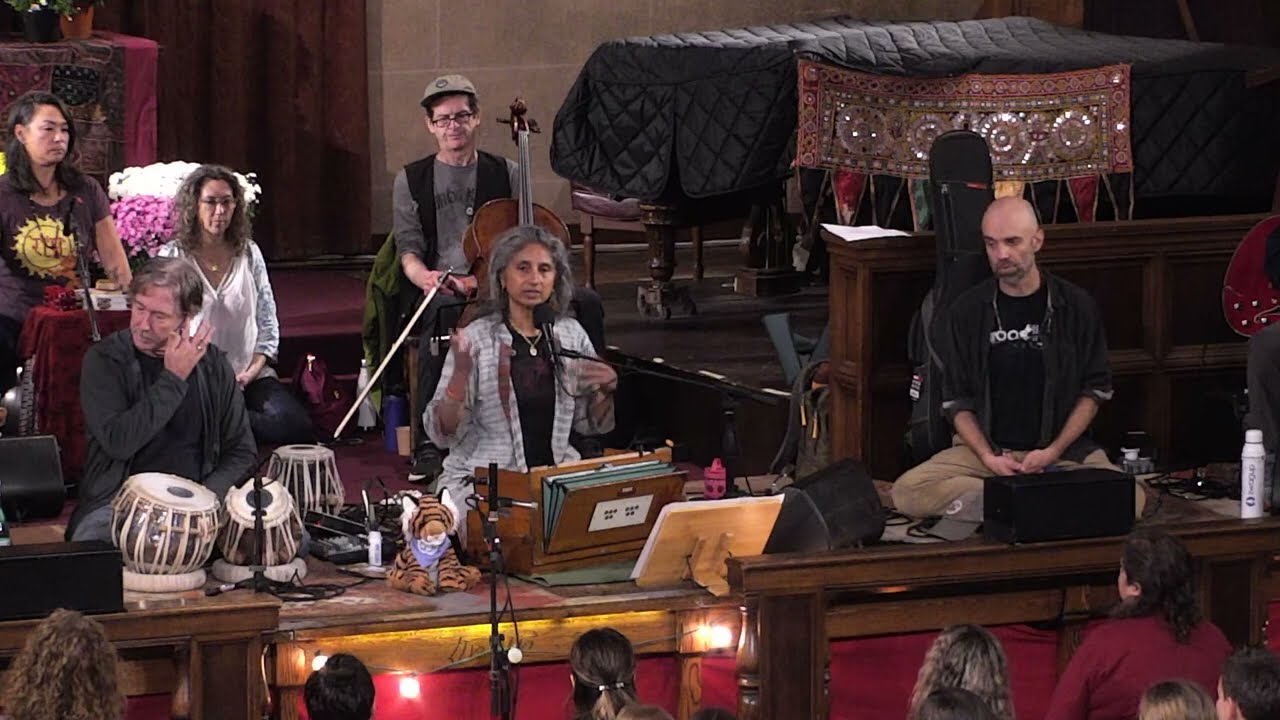
At the United Nations in June 2016, a spiritual teacher presented yoga not as an exercise practice but as a contemporary science directly applicable to solving the world's most pressing challenges. The address framed the Sustainable Development Goals—a global blueprint adopted by world leaders—as achievable through a shift in human consciousness enabled by yogic practices. The core argument: individual transformation through yoga creates the inner stability and clarity necessary for meaningful engagement with systemic problems like poverty, health, environmental degradation, and inequality.
What Are the Sustainable Development Goals and Why Does Yoga Matter?
The Sustainable Development Goals (SDGs) represent a collective commitment by the United Nations and world leaders to address the planet's most critical challenges: poverty, hunger, health, education, gender equality, clean water, affordable energy, economic growth, sustainable industry, reduced inequality, sustainable cities, responsible consumption, climate action, marine life, terrestrial ecosystems, peace, and institutional accountability. These are systemic, multidimensional problems that require transformation at the individual, institutional, and collective levels.
The invitation to address the UN's special event—"Conversation with Yoga Masters: Yoga for the Achievement of the Sustainable Development Goals"—reflected a recognition that these goals cannot be achieved through policy and infrastructure alone. They require a fundamental shift in human consciousness, values, and behavior. This is where yoga enters not as a wellness trend, but as a practical technology for inner development.
How Does Inner Transformation Connect to Global Challenges?
The central premise of this address is that the external crises facing the world—environmental destruction, conflict, inequality, poverty—are rooted in the quality of human consciousness. When individuals operate from a limited, contracted, self-centered awareness, they make choices that harm both themselves and the collective. When human consciousness expands through practice, the natural result is more sustainable, compassionate, and wise decision-making.
Yoga, understood in its deepest sense, is not about physical postures alone. It is about the union of individual consciousness with universal consciousness—a state in which the artificial boundaries between "self" and "other" dissolve. A person operating from this expanded awareness would not exploit the environment because they would understand that harm to nature is ultimately harm to themselves. They would not perpetuate inequality because they would viscerally recognize the interconnectedness of all beings.
What Is Yoga as a Contemporary Science?
One of the key themes in this presentation is that yoga is not a belief system or a religious practice, but a science—one developed over thousands of years through systematic investigation of human consciousness and potential. Unlike modern science, which typically focuses on external phenomena, yogic science investigates the inner dimensions of human experience: perception, emotion, energy, and consciousness itself.
The scientific validity of yoga practices is increasingly supported by modern research. Meditation and pranayama (breathing practices) measurably affect the nervous system, hormonal balance, and brain structure. Regular practitioners show improvements in focus, emotional regulation, stress resilience, and overall wellbeing. But the benefits extend beyond individual psychology—when large populations practice yoga, the collective consciousness shifts, making cooperation, sustainability, and justice more possible.
Why Is Individual Wellbeing Essential for Sustainable Development?
A person struggling with anxiety, depression, physical illness, or inner turmoil cannot be a reliable custodian of the planet or a builder of just institutions. They are too consumed by their own suffering to think clearly about others' needs or the long-term consequences of their actions. Conversely, someone who has cultivated stable inner wellbeing through yoga practice has the psychological and spiritual foundation to make wise choices that benefit not just themselves but the whole.
This is not escapism or spiritual bypass. It is recognition that sustainable solutions to global problems require human beings capable of clarity, compassion, and foresight. Yoga practices build exactly these capacities. They quiet the reactive mind, decrease the grip of ego, and develop the capacity to perceive reality as it actually is rather than through filters of fear, greed, or prejudice.
How Can Yoga Address Specific SDGs?
Consider health and wellbeing (SDG 3). Millions suffer from lifestyle diseases—obesity, diabetes, heart disease, depression—many of which are preventable through sustainable daily practices. Yoga is far more cost-effective and accessible than pharmaceutical interventions, and it addresses root causes by transforming how the body and mind function. A person who practices yoga regularly develops better body awareness, reduces stress hormones, improves sleep, and naturally gravitates toward healthier choices.
For quality education (SDG 4), a yoga-informed approach would emphasize not just information transfer but development of the whole person—intelligence, emotional maturity, ethical clarity, and the capacity for introspection. Students who meditate perform better academically and show improved attention and emotional regulation. They are also more capable of ethical reasoning about how to use their knowledge.
Environmental sustainability (SDG 13-15) becomes more achievable when humans viscerally understand their interdependence with nature rather than viewing it as a resource to exploit. A meditator's expanded sense of self naturally includes the earth, forests, and living beings. This is not sentimental ecology—it is the logical consequence of expanded consciousness.
Peace and reduced inequality (SDG 16-17) flow from the same principle. Conflict arises when groups see others as fundamentally different or threatening. When human consciousness expands through yoga, the perception of "other" shifts. You begin to recognize your own humanity reflected in all beings. This recognition is the bedrock of genuine justice and lasting peace.
What Is the Role of Collective Practice?
While individual yoga practice is essential, the address emphasizes that when large numbers of people practice together, the effects amplify. This is not mysticism—it is a recognition that consciousness operates at both individual and collective levels. When a critical mass of people in a society are meditating, practicing yoga, and cultivating inner stability, the collective consciousness shifts. Social movements become more cohesive, institutions become more ethical, and sustainable development becomes not a burden but a natural expression of shared values.
The International Day of Yoga itself—the day before this UN address—was initiated as a global event to create exactly this collective amplification. When millions of people practice yoga on the same day, the intention is not just individual benefit but a shift in the planet's consciousness toward sustainability and harmony.
How Does This Challenge the Conventional Development Model?
Much of the SDG framework assumes that external interventions—infrastructure, policy, technology, money—will solve global problems. These are necessary but not sufficient. The deeper insight offered in this address is that development that does not include human transformation will ultimately fail. A nation can build renewable energy infrastructure, but if the consciousness of its citizens remains extractive and short-sighted, they will find new ways to degrade the environment or exploit others.
True sustainable development must be simultaneously external and internal. Policies, systems, and technologies must change, but so must human consciousness. Yoga provides a tested, accessible pathway for this consciousness shift. It is not opposed to modern science or development; it complements and deepens them by ensuring they serve human flourishing and planetary health rather than narrow self-interest.
What Is the Practical Implication for Individuals?
If the argument above is true, then each person's yoga practice is not a personal luxury or wellness optimization—it is a contribution to global transformation. By meditating, practicing asana, or doing breathwork, you are not just improving your own health and happiness. You are gradually aligning yourself with the larger forces of evolution and sustainability. You become a node in a network of expanded consciousness that makes wise, collective action possible.
This creates a profound shift in how one relates to spiritual practice. It is not about escaping the world but about becoming more capable of serving it. It is not about individual enlightenment while the world burns, but about enlightenment as the precondition for effective, sustainable engagement with the world's real problems.
Where to go from here
If you are drawn to this vision of yoga as a tool for both personal transformation and global change, the next steps are practical: establish a consistent yoga and meditation practice, even if it is only 10-15 minutes daily. Explore whether yoga affects not just your body and stress levels but also your perception, clarity, and capacity for compassion. Notice how shifts in your own consciousness ripple outward into your relationships and choices. Consider how you might apply the principles of yoga—union, balance, non-harm, sustainability—to your work and relationships. And consider joining the larger movement toward conscious, sustainable development by practicing on significant collective days like the International Day of Yoga, recognizing that your individual practice is part of a planetary shift toward harmony and wellbeing.