EveryEvent Istanbul

Sfoglia tutti i Events

Find every event in Istanbul

events

Concerts & Live Music
Festivals
Sports & Recreation
Food & Drink
Arts & Culture
Community
Family & Kids
Nightlife
Comedy
Theater
Destinazioni popolari
BaliSedonaLos AngelesCosta RicaNew YorkSan FranciscoAustinMiamiJoshua TreeTulum
Vedi tutte le categorieVedi tutte le destinazioni

Esplora tutte le funzionalità

Strumenti potenti per far crescere i tuoi eventi

Funzionalità della piattaforma

Prezzi dinamici intelligenti
Categorie di biglietti
Posti assegnati
Recupero carrelli abbandonati
Recupero visitatori
Donazioni e prezzi variabili
Sistema affiliati
Scanner biglietti
Codici sconto
Domande personalizzate
Condivisione biglietti
Upsell e componenti aggiuntivi
Analisi e report
Sequenze email
Lista d'attesa / Notifica / Promemoria
Esplora
Discovery HubArtists & PerformersVenuesKnowledge Base
Vedi tutte le funzionalitàChi siamo
PrezziBlog
Language
Saved events
Sfoglia tutti gli eventi

events

Concerts & Live MusicFestivalsSports & RecreationFood & DrinkArts & CultureCommunityFamily & KidsNightlife

Destinazioni popolari

BaliSedonaLos AngelesCosta RicaNew YorkSan Francisco

Esplora

Discovery HubArtists & PerformersVenuesKnowledge Base

Funzionalità della piattaforma

Prezzi dinamici intelligentiCategorie di bigliettiPosti assegnatiRecupero carrelli abbandonatiRecupero visitatoriDonazioni e prezzi variabiliSistema affiliatiScanner bigliettiCodici scontoDomande personalizzateCondivisione bigliettiUpsell e componenti aggiuntiviAnalisi e reportSequenze emailLista d'attesa / Notifica / Promemoria
Vedi tutte le funzionalitàChi siamo
PrezziBlog
AccediRegistratiOrganizzatori di eventi
  • Browse All Events
  • Concerts & Live Music
  • Festivals
  • Sports & Recreation
  • Food & Drink
  • Arts & Culture
  • Community
  • Family & Kids
  • Nightlife
  • Tutte le categorie →
  • All Destinations →
  • For Promoters
  • For Artists
  • For Venues
  • For Festivals
  • For Event Spaces
  • For Nonprofits
  • For Bloggers
  • For Speakers
  • Brand Ambassador
  • Case Studies
  • Rete di 350K+ acquirenti
  • Recupero carrelli abbandonati
  • Prezzi dinamici intelligenti
  • Categorie di biglietti
  • Eventi ricorrenti
  • Posti assegnati
  • Sistema affiliati
  • Lista d'attesa / Notifica
  • Scanner biglietti
  • Widget incorporabile
  • Distribuzione eventi
  • Centro messaggi
  • Integrazioni
  • Report
  • Tutte le funzionalità →
  • Chi siamo
  • L’ecosistema
  • Blog
  • Glossario
  • Ispirazione
  • Centro assistenza
  • Contatti
  • Documentazione API
  • Risorse del brand
  • Carriere
  • Stampa
  • Termini di servizio
  • Informativa sulla privacy

Events

  • Browse All Events
  • Concerts & Live Music
  • Festivals
  • Sports & Recreation
  • Food & Drink
  • Arts & Culture
  • Community
  • Family & Kids
  • Nightlife
  • Tutte le categorie →

Getaways

  • All Destinations →

For Organizers

  • For Promoters
  • For Artists
  • For Venues
  • For Festivals
  • For Event Spaces
  • For Nonprofits
  • For Bloggers
  • For Speakers
  • Brand Ambassador
  • Case Studies

Funzionalità

  • Rete di 350K+ acquirenti
  • Recupero carrelli abbandonati
  • Prezzi dinamici intelligenti
  • Categorie di biglietti
  • Eventi ricorrenti
  • Posti assegnati
  • Sistema affiliati
  • Lista d'attesa / Notifica
  • Scanner biglietti
  • Widget incorporabile
  • Distribuzione eventi
  • Centro messaggi
  • Integrazioni
  • Report
  • Tutte le funzionalità →

Azienda

  • Chi siamo
  • L’ecosistema
  • Blog
  • Glossario
  • Ispirazione
  • Centro assistenza
  • Contatti
  • Documentazione API
  • Risorse del brand
  • Carriere
  • Stampa
  • Termini di servizio
  • Informativa sulla privacy
EveryEvent
© 2026 EveryEvent Istanbul. Tutti i diritti riservati.
Inspiration

Ong Namo Mantra: Invoking DivineWisdom Through Sacred Sound

Snatam Kaur
Snatam Kaur
Jul 30, 2010
7 min di lettura
Guarda · 4
Ong Namo — I bow to the subtle divine wisdom. Guru Dev Namo — I bow to the divine teacher within. This is a mantra rooted in Kundalini Yoga and Sikh philosophy, one that addresses both the transcendent intelligence woven through creation and the inner wisdom already present in the practitioner. Snatam Kaur's live performance of this sacred syllable creates an accessible entry point into how mantra functions not as metaphor but as direct invocation of consciousness itself.

Lettura · 7 sezioni

What Does Ong Namo Actually Mean?

The mantra breaks into two parts, each carrying distinct resonance. Ong represents the creative, infinite vibration underlying all existence—sometimes translated as the primordial sound from which all manifestation emerges. It is not God as a distant deity but the creative intelligence present in every atom, every breath, every thought. Namo means "I bow," a gesture of surrender and recognition. Together, Ong Namo becomes an invocation: "I bow to the subtle divine wisdom." It is a statement that acknowledges a reality beyond the individual ego.

The second part, Guru Dev Namo, shifts focus inward. Rather than bowing to an external teacher or institution, the mantra points to the guru dev—the divine teacher—already within. In yogic philosophy, this inner guru is the aspect of consciousness that knows your true nature, that recognizes what you need to learn and grow. It is not acquired from outside but unveiled through practice and intention.

How Mantra Dissolves the Boundary Between Self and Wisdom

Mantra works through vibration. When Snatam Kaur chants these syllables in a live setting, the sound enters the space through her voice, travels through the audience's bodies, and creates a collective resonance field. This is not mystical thinking—it is acoustic and neurological. Specific phonetic patterns, held and repeated, influence brainwave activity, emotional regulation, and sense of self-boundary.

The dissolution of ego that occurs in deep mantra practice has a specific mechanism: when the rational mind fixates on sound and meaning, the habitual commentary of the self—the internal narrative about "I am separate, I am insufficient, I must protect myself"—temporarily quiets. In that gap, the nervous system recognizes something else: continuity with the whole. The mantra does not create this; it removes the noise that obscures it.

Ong Namo in particular is designed to activate this recognition. By chanting to both the external creative principle (Ong) and the internal teacher (Guru Dev), the mantra collapses the false boundary between "out there" and "in here." The wisdom you are invoking is not arriving from heaven—it is emerging from the core of your own being, recognized and honored.

Why Chanting in Community Amplifies the Effect

In Snatam Kaur's live concert performance, individual practice becomes collective ceremony. When many voices chant the same mantra simultaneously, several things occur:

  • Entrainment: The nervous systems in the room begin to synchronize. Heartbeats regulate, breathing becomes coherent, the sense of isolation decreases measurably.
  • Amplification of intention: One person's intention to bow to inner wisdom is magnified by fifty or five hundred others holding the same recognition. The field becomes denser, more resonant.
  • Permission to surrender: Many people carry shame about vulnerability or spiritual seeking. Sitting in a room of others doing the same removes the shame and allows genuine opening.
  • Sound vibration density: The physical vibrations of multiple voices create a more complex, powerful acoustic field that the body can receive and internalize more deeply.

This is why kirtan—devotional chanting in group—has been central to spiritual practice across cultures for millennia. It is not superstition; it is applied neuroscience wrapped in devotion.

Ong Namo as a Gateway Mantra

Within Kundalini Yoga tradition, Ong Namo is typically chanted at the beginning of any practice session. It serves as a threshold: a way of saying to your own mind and body, "We are now entering sacred space. The ordinary concerns of the day are acknowledged but temporarily set aside. I open myself to wisdom beyond my conditioned thinking." This threshold function is crucial. Without it, practice becomes just another self-help technique, another effort of the willful ego.

By bowing first to the divine wisdom pervading all existence (Ong Namo), the mantra establishes that you are not the source of your own transformation. You are not trying to fix yourself through force of will. Instead, you are inviting an intelligence greater than your personal psychology to guide you. This reversal—from "I must figure this out" to "I bow to the wisdom that already exists"—is itself the beginning of change.

The second bow, to the guru within (Guru Dev Namo), removes the trap of spiritual dependency. You are not bowing to an external authority figure but to your own deepest knowing. This prevents both the inflation of ego ("I am enlightened") and its opposite, the collapse into spiritual bypassing ("I need someone else to save me"). Instead, you are recognizing your own capacity to perceive truth, while acknowledging that this capacity is not manufactured by the small self but revealed through surrender to something larger.

The Mechanics of Healing in Sacred Sound

Snatam Kaur's voice in this performance carries particular qualities: clear articulation of each syllable, a sustained, relaxed quality that does not strain, and an emotional tone that communicates reverence without sentimentality. These are not accidental features. They are the result of training in how sound affects the nervous system.

When a mantra is chanted with precision and presence, the tongue strikes specific points on the palate—points that correspond in traditional medicine to acupuncture meridians and in modern neuroscience to vagal nerve pathways. This stimulation has documented effects on the parasympathetic nervous system, the part responsible for rest, digestion, and immune function. Over time, mantra practice literally rewires the nervous system toward greater resilience and less reactivity.

Moreover, the emotional tone of the chanter matters. If Snatam Kaur were merely performing these syllables as a technique, as a means to an end, the effect would be flattened. But when she chants from genuine devotion—when her bow to divine wisdom is real—that authenticity is encoded in the vibration. The audience receives not just sound waves but a transmission of genuine inner opening. This is why hearing a master chanter is not the same as listening to a recording of someone reciting the same words mechanically.

How to Begin Your Own Ong Namo Practice

Ong Namo does not require years of prior study or special equipment. The simplest approach is to sit comfortably, spine upright but not rigid, and begin to chant the mantra silently or aloud. If chanting aloud, allow the sound to come from your belly, not your throat, so that it resonates through your torso rather than straining the vocal cords. The traditional pattern is to chant on an exhale, allowing the breath to carry the sound.

For those new to mantra, starting with five to ten minutes is sufficient. Consistency matters more than duration. A brief daily practice will produce more change than a marathon session once a month. The repetition establishes a groove in the nervous system, a path toward the inner teacher that becomes easier to access each time you walk it.

As you practice, you may notice that the mantra begins to chant itself. This is a sign that the thinking mind has released its grip slightly, and a deeper layer of consciousness is engaging with the sound. This is the state in which transformation actually occurs—not through effort, but through alignment.

Where to Go From Here

Listening to Snatam Kaur's recording of Ong Namo is one entry point. From there, you might explore other Kundalini Yoga mantras, each of which addresses different aspects of consciousness and healing. You could also investigate the philosophy underlying these practices—the Sikh Gurus' teachings on the nature of divine wisdom, or classical yogic texts on the chakra system and the pathways of consciousness within the body.

Most importantly, move from listening to practice. The mantra's power is not theoretical. It is realized only through the direct experience of your own voice, your own breath, your own nervous system responding to the vibration. Begin small, be consistent, and notice what unfolds when you bow regularly to the wisdom already present within you.

]]>
Transcript

[0:13] the rain is pouring down

[0:17] [Music]

[0:22] like all the souls you send me

[0:27] [Music]

[0:29] coming to this earth to

[0:37] find

[0:39] healing

[0:44] [Music]

[0:46] mother

[0:48] takes in the rain

[0:52] [Music]

[0:55] like your heart takes my voice

[1:00] [Music]

[1:06] let us free each other

[1:09] [Music]

[1:13] with her

[1:15] [Music]

[1:18] with our voice

[1:21] [Applause]

[1:21] [Music]

[1:27] come

[1:28] [Music]

[1:32] and I'm coming

[1:35] [Music]

[1:39] I'm

[1:40] coming

[1:45] and I'm coming

[1:48] [Music]

[2:14] ah

[2:17] [Music]

[2:25] Oh

[2:26] [Music]

[2:27] now

[2:32] guru

[2:35] No

[2:38] Oh

[2:38] [Music]

[2:43] No

[2:48] good

[2:50] me

[2:53] Oh

[2:54] [Music]

[3:27] Oh

[3:29] [Music]

[3:53] [Applause]

[3:57] [Music]

[4:01] [Applause]

[4:07] [Music]

[4:09] [Applause]

[4:13] [Music]

[4:19] [Applause]

[4:21] [Music]

[4:30] Oh

[4:32] [Music]

[4:53] [Applause]

[4:58] [Music]

[4:58] [Applause]

[5:00] [Music]

[5:12] [Music]

[5:22] go

[5:27] [Music]

[5:28] [Applause]

[5:31] [Music]

[5:32] [Applause]

[5:38] go to the

[5:40] [Music]

[5:44] [Applause]

[5:53] [Music]

[6:04] [Applause]

[6:09] Oh

[6:11] good

[6:13] [Music]

[6:22] [Applause]

[6:24] [Music]

[6:25] [Applause]

[6:26] [Music]

[6:34] good

[6:41] [Music]

[6:42] [Applause]

[6:47] [Music]

[7:04] Oh

[7:04] [Music]

[7:20] Oh

[7:22] [Music]

[7:30] about my

[7:32] [Music]

[7:39] and God took all of me

[7:44] [Music]

[7:47] every imperfection

[7:55] got

[7:56] economy

[8:01] [Music]

[8:02] and

[8:04] everyday

[8:09] God lives and reign

[8:14] [Music]

[8:19] looking in

[8:20] [Music]

[8:27] I love you sweet

[8:30] [Music]

[8:34] oh

[8:35] my beloved

[8:42] kindness of the heart

[8:45] [Music]

[8:50] brother

[8:52] [Music]

[8:54] Oh

[8:55] [Music]

[8:59] to

[9:01] [Music]

[9:13] yah

[9:17] ah

[9:19] [Music]

[9:25] I

[9:29] [Music]

[9:31] again

[9:32] [Music]

[9:37] see

[9:41] [Music]

[9:44] beyond time and space

[9:49] [Music]

[9:56] [Music]

[10:06] yes

[10:07] [Music]

[10:20] Oh

[10:21] [Music]

[10:28] [Music]

[10:38] Oh

[10:41] [Applause]

[10:45] [Music]

[10:53] Oh

[10:55] [Applause]

[11:00] [Music]

[11:06] [Applause]

[11:08] [Music]

[11:11] this is

[11:14] [Music]

[11:19] day

[11:21] is your race

[11:23] to sing with me

[11:26] [Music]

[11:28] is your

[11:34] this

[11:39] every breath I take

[11:42] this is

[11:49] this

[11:54] everyone I speak

[11:57] [Music]

[12:09] every tear I shed

[12:12] [Music]

[12:20] this

[12:24] every hand I

[12:27] Oh

[12:28] [Music]

[12:34] [Music]

[12:39] every salt I

[12:41] [Applause]

[12:41] [Music]

[12:43] this

[12:47] [Music]

[12:50] this is

[12:53] Oh

[12:55] you

Snatam Kaur
AutoreSnatam Kaur

Snatam Kaur is a world-renowned, Grammy-nominated devotional singer, touring musician, teacher, and author known for her luminous voice and the heartfelt depth of her music and tea…

Vedi il profiloSito web
Esplora i temi
Ong-namoMantra-chantingKundalini-yogaSacred-soundDivine-wisdom

Hai domande?

Domande frequenti

Ong Namo translates to "I bow to the subtle divine wisdom." Yogis chant it to invoke the creative intelligence underlying all existence (Ong) and to acknowledge that source through a gesture of surrender (Namo). It is typically used at the beginning of Kundalini Yoga practice to establish intention and remove the ego from the process of transformation.
Mantra chanting affects the vagus nerve and parasympathetic nervous system through the precise striking of tongue against palate points during each syllable. Combined with the rhythmic breathing pattern and the intention-carrying vibration of sound, this rewires the nervous system over time toward greater calm, resilience, and reduced reactivity.
Guru Dev Namo means "I bow to the divine teacher within." Rather than seeking wisdom from an external authority, this phrase points to the inner knowing that already exists in the practitioner's consciousness. It prevents spiritual dependency while also preventing spiritual bypassing—you recognize your own capacity to perceive truth.
In group kirtan, individual nervous systems entrain with one another, intention becomes amplified through collective focus, and the shame often surrounding spiritual vulnerability decreases. The combined acoustic vibration of multiple voices creates a denser energy field that the body can absorb more deeply than a single voice alone.
Yes. Ong Namo requires no special equipment or prior training. Sit upright with a relaxed spine and chant the syllables silently or aloud for 5-10 minutes daily. Consistency matters more than duration—a brief daily practice produces more change than occasional longer sessions.
Some people notice shifts in calm, clarity, or mood within a single session, while deeper nervous system rewiring typically becomes apparent within 2-4 weeks of consistent daily practice. The effects are cumulative—each session builds on previous ones.
Ong Namo originates in Kundalini Yoga and Sikh philosophy, but the mantra works on the level of sound vibration and nervous system response, not belief. Practitioners of any or no religion can benefit from the practice—the wisdom it invokes is understood as universal rather than sectarian.

Continua a leggere

More from Snatam

Vedi Tutto
By Thy Grace: Snatam Kaur's Twenty-Five Years of Mantra
Featured

By Thy Grace: Snatam Kaur's Twenty-Five Years of Mantra

From a Colorado birth and a California childhood to a Grammy stage — Snatam Kaur marks 25 years of sacred chant with the By Thy Grace tour, …

1 min read
Long Time Sun: Kirtan and Blessing in Live Song
Featured

Long Time Sun: Kirtan and Blessing in Live Song

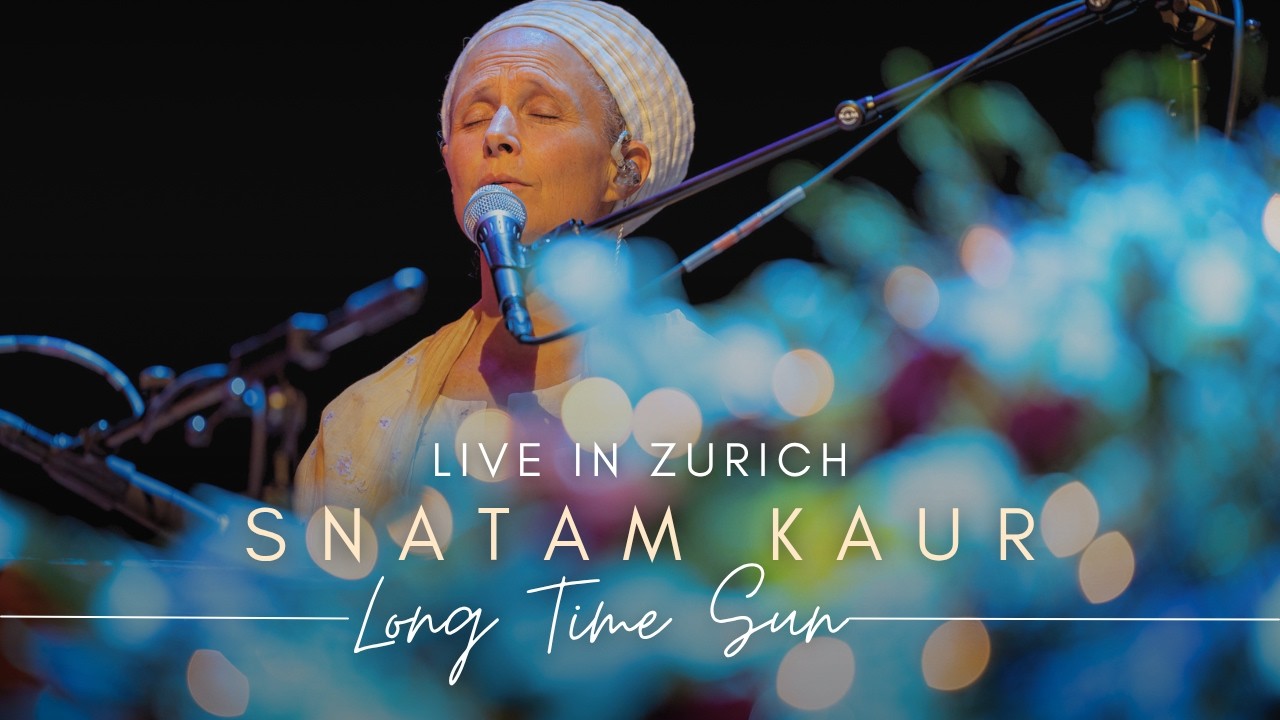
A live performance of the devotional blessing "Long Time Sun" recorded in Zurich featuring clarinet, three-part harmonies, and tabla.…

1 min read
How Sitting Still Proves You're Already Awakening
Featured

How Sitting Still Proves You're Already Awakening

Most people can't sit quietly without discomfort, but if you can, you're already further along spiritually than you realize. Eckhart Tolle e…

1 min read
The Missing Piece: How Real Thinking Creates Real Results
Featured

The Missing Piece: How Real Thinking Creates Real Results

Most vision boards fail because people skip the actual thinking. Eckhart Tolle reveals the rhythm that unlocks insight and the two distinct …

1 min read

Continua a esplorare

Continua il tuo viaggio

Altra saggezza e altri incontri da tutta la directory BrightStar.

Altri articoli

Sfoglia l’intera raccolta di insegnamenti, interviste e guide.

Torna a tutti gli articoli →

Insegnanti e artisti

Esplora i lignaggi, i musicisti e le guide del mondo consapevole.

Esplora gli artisti →

Trova un evento

Kirtan, ritiri, sound bath, breathwork, festival: in arrivo presto.

Sfoglia gli eventi →