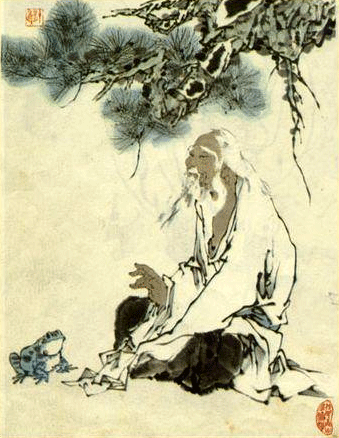
The Path of Balance: Navigating the Way
Chuang Tzu's assertion that "You may walk too far to one side or the other and still find that you have left the Way" serves as a poignant reminder of the delicate balance required in our spiritual journeys. This quote encapsulates the essence of discernment, urging us to recognize that straying from the middle path can lead us away from our true purpose. In a world rife with extremes, understanding this principle becomes crucial for those seeking a harmonious existence.
At its core, this teaching invites us to reflect on the nature of our choices and the paths we tread. It suggests that the journey is not merely about the direction we take but also about the awareness we cultivate along the way. The Way, in this context, represents a deeper understanding of life, a state of being that transcends duality. To walk the Way is to embrace balance, to navigate the complexities of existence with grace and insight.
The image / the metaphor
The imagery in Chuang Tzu's quote evokes a sense of movement and directionality, suggesting that our lives are akin to a path we traverse. The verbs "walk" and "find" imply an active engagement with our surroundings, highlighting the dynamic nature of our spiritual exploration. The phrase "too far to one side or the other" conjures images of a tightrope walker, precariously balancing between extremes, a metaphor for the human experience of navigating choices and consequences.
Diving deeper into this metaphor, we can see that the "Way" symbolizes not just a physical path but a spiritual journey marked by awareness and discernment. The act of walking implies progress, yet the caution against veering too far reminds us of the importance of mindfulness. It suggests that even in our pursuit of truth, we must remain vigilant, for the allure of extremes can easily lead us astray from our authentic selves.
In the speaker's tradition
Chuang Tzu's wisdom is deeply rooted in Taoism, a tradition that emphasizes the interconnectedness of all things and the importance of living in harmony with the natural flow of the universe. Central to this philosophy is the concept of wu wei, or effortless action, which encourages individuals to align themselves with the rhythms of life rather than forcefully impose their will. This idea resonates with the notion of discernment, as it invites us to navigate our lives with an awareness that transcends rigid dichotomies.
In the Zhuangzi, a foundational text of Taoism, we find numerous parables that illustrate the pitfalls of attachment to extremes. One such story involves a fish who, in its struggle to escape a net, becomes ensnared by its own frantic movements. This tale serves as a powerful reminder that in our quest for freedom or enlightenment, we may inadvertently bind ourselves through our own desires and fears. Chuang Tzu's teachings encourage us to embrace the fluidity of existence and to recognize that true wisdom lies in the balance between action and stillness.
Living the teaching
Consider a modern scenario where this teaching resonates: a professional striving for success in a competitive environment. In their pursuit of career advancement, they may find themselves working excessively long hours, sacrificing personal relationships and well-being. This imbalance can lead to burnout, ultimately causing them to feel disconnected from their original intentions and values. By reflecting on Chuang Tzu's wisdom, they might recognize the importance of stepping back, reassessing their priorities, and finding a more harmonious approach to their ambitions.
In the realm of relationships, the teaching of balance can also manifest in the dynamics between partners. A couple may find themselves caught in a cycle of conflict, each person holding steadfastly to their own perspective. In such moments, the reminder of walking the Way can inspire them to seek a middle ground, fostering open communication and empathy. By letting go of rigid positions and embracing the fluidity of their connection, they can cultivate a deeper understanding and appreciation for one another.
A reflection
As we contemplate Chuang Tzu's profound insight, we are invited to consider our own lives and the paths we navigate. Are there areas where we have strayed too far to one side, losing sight of the balance that sustains us? In what ways can we cultivate a deeper awareness of our choices and their impact on our journey? Let these questions guide your reflections as you seek to embody the wisdom of the Way.



Join the BrightStar Community
Stay connected with daily inspiration, event announcements, and community wisdom