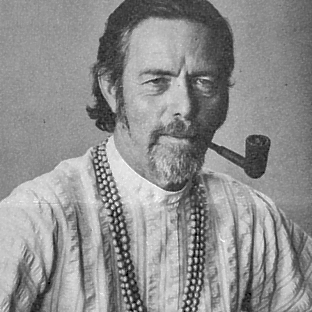
The Forgotten Language of Being
In the profound words of Alan Watts, "What we have forgotten is that thoughts and words are conventions." This statement invites us to reflect on the nature of language and thought, suggesting that they are not intrinsic truths but rather agreed-upon symbols that shape our understanding of reality. The stakes are high; in a world increasingly dominated by divisive rhetoric and miscommunication, recognizing the conventional nature of our expressions can lead to deeper understanding and connection. It challenges us to reconsider how we engage with one another and the world around us.
Watts's assertion serves as a reminder that our thoughts and words, while powerful, are ultimately constructs that can obscure the essence of our experiences. By forgetting this, we risk becoming trapped in a labyrinth of misunderstanding, where the richness of direct experience is overshadowed by the limitations of language. This realization is not merely an intellectual exercise; it is a call to awaken to the immediacy of life itself, beyond the confines of our verbal frameworks. In doing so, we may find a path toward greater clarity and compassion.
The image / the metaphor
The imagery in Watts's quote evokes a sense of detachment from the very tools we use to navigate our lives. The term "conventions" suggests a social agreement, a collective understanding that has been established over time. Words and thoughts are like maps; they guide us but can never fully encapsulate the territory they represent. When we cling too tightly to these maps, we risk losing sight of the vibrant landscape of our lived experience, which is rich and nuanced, far beyond the limitations of language.
Diving deeper into the metaphor, we can see that thoughts and words are akin to the surface of a pond, reflecting the sky but never capturing its depth. When we forget that these reflections are merely conventions, we may mistake them for the reality itself. This misunderstanding can lead to a sense of isolation, as we become ensnared in our own interpretations, unable to connect with the fluidity of existence. By recognizing the transient nature of our thoughts and words, we can begin to experience life more fully, embracing the mystery that lies beneath the surface.
In the speaker's tradition
Alan Watts, a pivotal figure in popularizing Eastern philosophy in the West, draws heavily from Zen traditions that emphasize the impermanence and interdependence of all things. Concepts such as *sunyata* (emptiness) and *prajna* (wisdom) resonate deeply with his assertion about language. In Zen, the understanding that all phenomena are interconnected and devoid of inherent essence parallels Watts's idea that thoughts and words are mere conventions. This perspective invites us to engage with the world without the constraints of rigid definitions, allowing for a more fluid and authentic experience of reality.
In his work, *The Way of Zen*, Watts illustrates how language can both illuminate and obscure our understanding of the world. He references the Zen practice of *koan*, a paradoxical statement or question that challenges conventional thinking and invites deeper contemplation. Just as a koan disrupts our habitual patterns of thought, Watts's quote encourages us to question the very foundations of our linguistic constructs. By doing so, we can cultivate a more profound awareness of our experiences, moving beyond the limitations of words to embrace the fullness of being.
Living the teaching
Consider a modern scenario where this teaching can be applied: a heated discussion about a contentious social issue. In such moments, individuals often become entrenched in their positions, wielding words as weapons rather than tools for understanding. By remembering that thoughts and words are conventions, participants can step back and recognize the shared humanity behind differing viewpoints. This awareness can transform a potentially divisive conversation into an opportunity for connection, fostering empathy and dialogue rather than conflict.
Another application of this teaching might arise in personal relationships, particularly during moments of misunderstanding. When a partner expresses frustration, it is easy to become defensive, interpreting their words as a personal attack. However, if we can remember that their words are conventions shaped by their own experiences and emotions, we can approach the situation with greater compassion. This shift in perspective allows for a more open-hearted response, creating space for healing and deeper connection, rather than perpetuating cycles of miscommunication.
A reflection
As we contemplate Watts's insight, we might ask ourselves: How often do I confuse my thoughts and words with the essence of my experiences? This question invites us to explore the ways in which we engage with language and thought, encouraging a deeper inquiry into the nature of our perceptions. By reflecting on this, we can cultivate a more mindful approach to communication, fostering a greater sense of connection with ourselves and others in the process.




Join the BrightStar Community
Stay connected with daily inspiration, event announcements, and community wisdom