EveryEvent Istanbul

Parcourir tous les Events

Find every event in Istanbul

events

Concerts & Live Music
Festivals
Sports & Recreation
Food & Drink
Arts & Culture
Community
Family & Kids
Nightlife
Comedy
Theater
Destinations populaires
BaliSedonaLos AngelesCosta RicaNew YorkSan FranciscoAustinMiamiJoshua TreeTulum
Voir toutes les catégoriesVoir toutes les destinations

Explorer toutes les fonctionnalités

Des outils puissants pour développer tes événements

Fonctionnalités de la plateforme

Tarification dynamique intelligente
Catégories de billets
Places assignées
Récupération des paniers abandonnés
Récupération des visiteurs
Dons & Prix variables
Système d'affiliation
Scanner de billets
Codes promo
Questions personnalisées
Partage de billets
Ventes additionnelles & Options
Analyses & Rapports
Séquences d'emails
Liste d'attente / Notifier / Rappeler
Explorer
Discovery HubArtists & PerformersVenuesKnowledge Base
Voir toutes les fonctionnalitésÀ propos
TarifsBlog
Language
Saved events
Parcourir tous les événements

events

Concerts & Live MusicFestivalsSports & RecreationFood & DrinkArts & CultureCommunityFamily & KidsNightlife

Destinations populaires

BaliSedonaLos AngelesCosta RicaNew YorkSan Francisco

Explorer

Discovery HubArtists & PerformersVenuesKnowledge Base

Fonctionnalités de la plateforme

Tarification dynamique intelligenteCatégories de billetsPlaces assignéesRécupération des paniers abandonnésRécupération des visiteursDons & Prix variablesSystème d'affiliationScanner de billetsCodes promoQuestions personnaliséesPartage de billetsVentes additionnelles & OptionsAnalyses & RapportsSéquences d'emailsListe d'attente / Notifier / Rappeler
Voir toutes les fonctionnalitésÀ propos
TarifsBlog
ConnexionS'inscrireOrganisateurs d'événements
  • Browse All Events
  • Concerts & Live Music
  • Festivals
  • Sports & Recreation
  • Food & Drink
  • Arts & Culture
  • Community
  • Family & Kids
  • Nightlife
  • Toutes les catégories →
  • All Destinations →
  • For Promoters
  • For Artists
  • For Venues
  • For Festivals
  • For Event Spaces
  • For Nonprofits
  • For Bloggers
  • For Speakers
  • Brand Ambassador
  • Case Studies
  • Réseau de 350K+ acheteurs
  • Récupération des paniers abandonnés
  • Tarification dynamique intelligente
  • Catégories de billets
  • Événements récurrents
  • Places assignées
  • Système d'affiliation
  • Liste d'attente / Notifier
  • Scanner de billets
  • Widget intégrable
  • Diffusion d'événements
  • Messagerie
  • Intégrations
  • Rapports
  • Toutes les fonctionnalités →
  • À propos
  • L'écosystème
  • Blog
  • Glossaire
  • Inspiration
  • Centre d'aide
  • Contact
  • Documentation API
  • Ressources de marque
  • Carrières
  • Presse
  • Conditions d'utilisation
  • Politique de confidentialité

Events

  • Browse All Events
  • Concerts & Live Music
  • Festivals
  • Sports & Recreation
  • Food & Drink
  • Arts & Culture
  • Community
  • Family & Kids
  • Nightlife
  • Toutes les catégories →

Getaways

  • All Destinations →

For Organizers

  • For Promoters
  • For Artists
  • For Venues
  • For Festivals
  • For Event Spaces
  • For Nonprofits
  • For Bloggers
  • For Speakers
  • Brand Ambassador
  • Case Studies

Fonctionnalités

  • Réseau de 350K+ acheteurs
  • Récupération des paniers abandonnés
  • Tarification dynamique intelligente
  • Catégories de billets
  • Événements récurrents
  • Places assignées
  • Système d'affiliation
  • Liste d'attente / Notifier
  • Scanner de billets
  • Widget intégrable
  • Diffusion d'événements
  • Messagerie
  • Intégrations
  • Rapports
  • Toutes les fonctionnalités →

Entreprise

  • À propos
  • L'écosystème
  • Blog
  • Glossaire
  • Inspiration
  • Centre d'aide
  • Contact
  • Documentation API
  • Ressources de marque
  • Carrières
  • Presse
  • Conditions d'utilisation
  • Politique de confidentialité
EveryEvent
© 2026 EveryEvent Istanbul. Tous droits réservés.
Inspiration

Krishna as aComplete Divine Incarnation

Sadhguru
Sadhguru
Sep 25, 2020
6 min de lecture

Krishna represents a complete incarnation of the divine not as an abstract spiritual ideal but as a fully actualized human being capable of excellence across multiple domains—spirituality, leadership, warrior prowess, diplomacy, and profound philosophy. Rather than embodying a single virtue, Krishna modeled an integration of all human capacities in service of a greater cosmic order. This completeness—encompassing both the transcendent and the intensely practical—offers a different template for understanding divine incarnation than one-dimensional spiritual figures.

Lecture · 6 sections

What does "complete incarnation" actually mean?

When discussing Krishna as a "complete incarnation of the divine," the distinction lies in wholeness rather than specialization. Many spiritual figures throughout history have embodied particular virtues or paths—renunciation, devotion, knowledge, or service. Krishna, by contrast, represented an integration of all these dimensions simultaneously.

This completeness manifests in several ways. Krishna was not simply a philosopher who happened to fight wars, or a warrior who happened to have spiritual insight. He was fully present in each role with the same depth and mastery. He could engage in complex diplomatic negotiations, command armies in battle, offer profound metaphysical teachings, participate in devotional music and dance, and navigate the intricate relationships of family and community. Rather than compartmentalizing these aspects of life, Krishna brought spiritual consciousness into every sphere of activity.

This understanding challenges a common tendency to separate the spiritual from the practical. Many spiritual traditions emphasize withdrawal from worldly life as the path to enlightenment. Krishna's life demonstrates something different: complete spiritual realization expressed through full engagement with all dimensions of human existence.

How did Krishna embody multiple capacities simultaneously?

Krishna's multifaceted nature becomes visible when examining the different contexts in which he operated. As a cowherd in his youth, he lived in close connection with nature and community. He engaged in playful, sensual expression through music and dance—the rasa lila and his intimate relationships. This was not separate from his spiritual nature but an expression of it.

In his role as a counselor and strategist, Krishna operated at the highest levels of political and military intelligence. During the Mahabharata war, he served as the charioteer of Arjuna and offered the Bhagavad Gita—arguably humanity's most significant teachings on action, duty, and consciousness. Yet this profound philosophy emerged not in a monastery or retreat, but in the midst of a battlefield, addressing a man paralyzed by moral doubt.

Krishna's warrior capacity was equally developed. He fought directly in battles, demonstrated martial prowess, and understood the nuances of conflict and strategy. Yet he never lost sight of dharma—right action aligned with cosmic order—as the framework for all his decisions. Violence, when necessary, was executed without personal attachment or ego-driven motivation.

As a lover and friend, Krishna engaged in intimate relationships with depth and presence. His connection with Radha and the gopis (cowherd girls) represents devotional love at its most refined. His friendship with Arjuna shows loyalty, support, and willingness to be present for another's transformation. These relationships were not distractions from spirituality but expressions of it.

What made Krishna's completeness different from other spiritual figures?

Many spiritual traditions have produced individuals of extraordinary capacity, but Krishna's particular integration stands out. A renunciate saint achieves liberation through withdrawal; Krishna achieved it through total engagement. A great philosopher articulates truth; Krishna embodied it in action. A skilled warrior mastered combat; Krishna mastered the spiritual dimensions of conflict.

The key distinction is that Krishna did not sacrifice one dimension for another. He did not become a warrior by suppressing his spiritual consciousness, nor did he maintain spiritual purity by avoiding practical engagement. Instead, all capacities coexisted and enhanced one another. His warrior prowess was sharpened by his clarity of consciousness. His spiritual teachings gained credibility from his demonstrated mastery in worldly domains.

This completeness also reflects a particular understanding of incarnation itself. Rather than a divine being temporarily inhabiting human form, Krishna lived as a full human—with apparent vulnerabilities, relationships, and participation in historical events—while simultaneously functioning from a completely different level of consciousness and capability. He was not pretending to be human; he was fully human while fully divine.

How does Krishna's completeness relate to understanding human potential?

Krishna's example suggests that human potential is not limited to a single sphere of excellence. The modern tendency often narrows human development to one track: the businessman becomes expert in commerce but ignorant of spirituality; the monk masters meditation but struggles with practical matters; the athlete develops physical prowess while neglecting intellectual growth.

Krishna's life proposes an alternative: that a human being can develop fully across all dimensions. This requires not simply acquiring skills but achieving a state of consciousness from which all capacities naturally flow. When someone is aligned with their deepest nature—what in yogic terms is called the Self—all actions flow from that clarity.

The integration also addresses a common spiritual misconception: that realization requires renunciation of the world. Krishna demonstrates that the ultimate realization can coexist with the most intense engagement. What changes is not the level of engagement but the consciousness from which one engages. Actions performed without attachment, ego, or personal agenda have a different quality than those driven by personal ambition or fear.

What practical implications does Krishna's model have?

Understanding Krishna as a complete incarnation offers a template for human development that many find more applicable than purely renunciate models. It suggests that one need not choose between spiritual practice and worldly mastery, between inner development and outer contribution, between personal fulfillment and service to something larger.

This has implications for how people approach their own development. Rather than viewing spirituality as a spare-time activity or an escape from ordinary life, Krishna's example suggests integrating consciousness into all activities. The professional can bring mindfulness and clarity to their work. The parent can approach relationships with spiritual depth. The person in conflict can respond from the level of dharma rather than reactivity.

The model also addresses the question of leadership and responsibility. Krishna never abdicated his role or withdrew from difficult situations. When called to participate in the Mahabharata war, he did so fully, despite the moral complexity. Yet his participation was guided by clear principles and unwavering clarity about what was right action in a given moment. This combination of engagement and principles offers a framework for leaders and decision-makers seeking to act from a higher level of consciousness.

Where to go from here

Krishna's completeness is not presented as a historical biography to be studied but as a living principle to be explored in one's own development. For those interested in deeper engagement with these ideas, several approaches offer value: studying the Bhagavad Gita not as philosophy but as a manual for action in the face of moral complexity; examining Krishna's life story through the Mahabharata and Bhagavata Purana to recognize patterns of integrated development; or engaging in yogic or meditative practices designed to cultivate the clarity and integration that allowed Krishna to function across all domains.

The question Krishna's life raises is not "How can I be like Krishna?" but "What blocks me from developing fully across all dimensions of my being?" That inquiry, pursued through practice and sincere self-examination, offers the practical beginning of understanding what a complete incarnation might mean.

Sadhguru
AuteurSadhguru

Indian yogi, mystic, and founder of the Isha Foundation. Through his programs (Inner Engineering, Bhava Spandana, Samyama) and books, he has introduced millions worldwide to a cont…

Voir le profilSite web
Explorer les thèmes
KrishnaDivine-incarnationConsciousnessIntegrationSpirituality-and-action

Des questions ?

Questions fréquemment posées

Krishna represented a fully integrated human being who achieved excellence across all dimensions—spiritual wisdom, military strategy, diplomacy, artistic expression, and devotional love—simultaneously. Rather than specializing in one domain, he brought complete consciousness to every sphere of activity, embodying the principle that spiritual realization and worldly mastery are not mutually exclusive.
Krishna demonstrated that spiritual consciousness and active participation in complex situations can coexist. His teachings in the Bhagavad Gita emerged from the battlefield itself, addressing how to act aligned with dharma (right order) without attachment to outcomes. His clarity of consciousness allowed him to engage fully while remaining free from ego-driven motivation.
Krishna's life suggests that humans can develop fully across multiple domains—professional, relational, creative, and spiritual—without choosing one at the expense of others. The practical application involves bringing conscious awareness and clear principles to all activities, rather than compartmentalizing life into spiritual and non-spiritual domains.
While many spiritual figures achieved realization through renunciation or specialization in a single path, Krishna achieved it through total engagement with life. He mastered spirituality without withdrawing from the world, demonstrated warrior excellence without losing ethical clarity, and expressed devotional love while maintaining complete spiritual consciousness.
Krishna's decisions were guided by dharma—alignment with cosmic order and right action—rather than personal preference or ego. His multiple capacities (strategic intelligence, spiritual clarity, understanding of human nature) converged to allow him to perceive the right action in complex situations and execute it with full commitment.
Yes. Krishna's example suggests that leaders can act from both clarity and engagement, combining strategic intelligence with ethical principles and spiritual consciousness. The key is recognizing that effectiveness doesn't require compromising principles, and that the deepest consciousness applied to practical problems produces the most sustainable solutions.
Whether Krishna was a historical person or mythological archetype, his life story functions as a teaching about human potential and the possibility of integrating all capacities in service of dharma. The value lies less in historical verification and more in understanding what complete human development looks like.

Continuer la lecture

More from Sadhguru

Voir tout
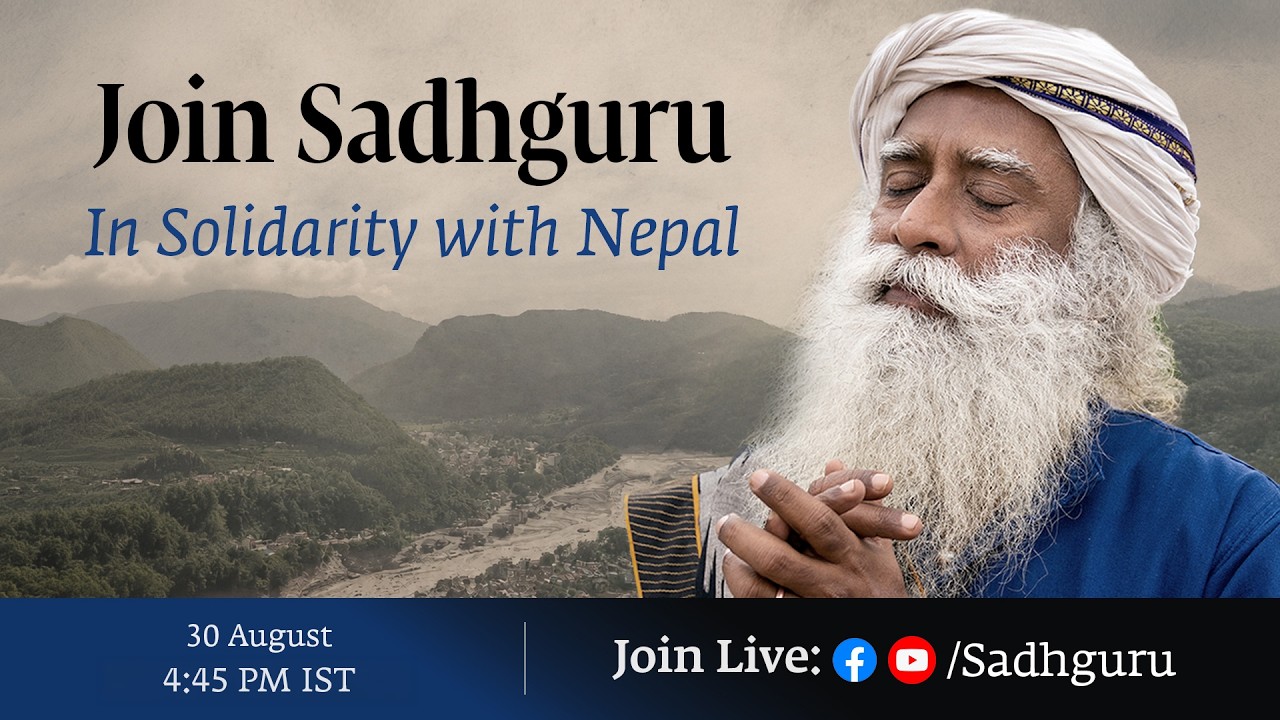
When Grief Becomes a Mirror: What the Nepal Floods Teach
Featured

When Grief Becomes a Mirror: What the Nepal Floods Teach

A flash flood on the Nepal-Tibet border devastated communities and claimed lives. This event became a moment to examine how we respond to tr…

1 min read
Mount Kailash's Hidden Dimensions: Mystical Phenomena Beyond Logic
Featured

Mount Kailash's Hidden Dimensions: Mystical Phenomena Beyond Logic

A 21-year pilgrimage reveals Mount Kailash and Lake Manasarovar as repositories of consciousness and extraordinary life forms defying conven…

1 min read
How Sitting Still Proves You're Already Awakening
Featured

How Sitting Still Proves You're Already Awakening

Most people can't sit quietly without discomfort, but if you can, you're already further along spiritually than you realize. Eckhart Tolle e…

1 min read
The Missing Piece: How Real Thinking Creates Real Results
Featured

The Missing Piece: How Real Thinking Creates Real Results

Most vision boards fail because people skip the actual thinking. Eckhart Tolle reveals the rhythm that unlocks insight and the two distinct …

1 min read

Continue d’explorer

Poursuis ton chemin

Plus de sagesse et de rassemblements dans tout l’annuaire BrightStar.

Plus d’articles

Parcours toute la bibliothèque d’enseignements, d’entretiens et de guides.

Retour à tous les articles →

Enseignants et artistes

Découvre les lignées, les musiciens et les guides du monde conscient.

Explorer les artistes →

Trouver un événement

Kirtan, retraites, bains sonores, breathwork, festivals — bientôt près de chez toi.

Parcourir les événements →