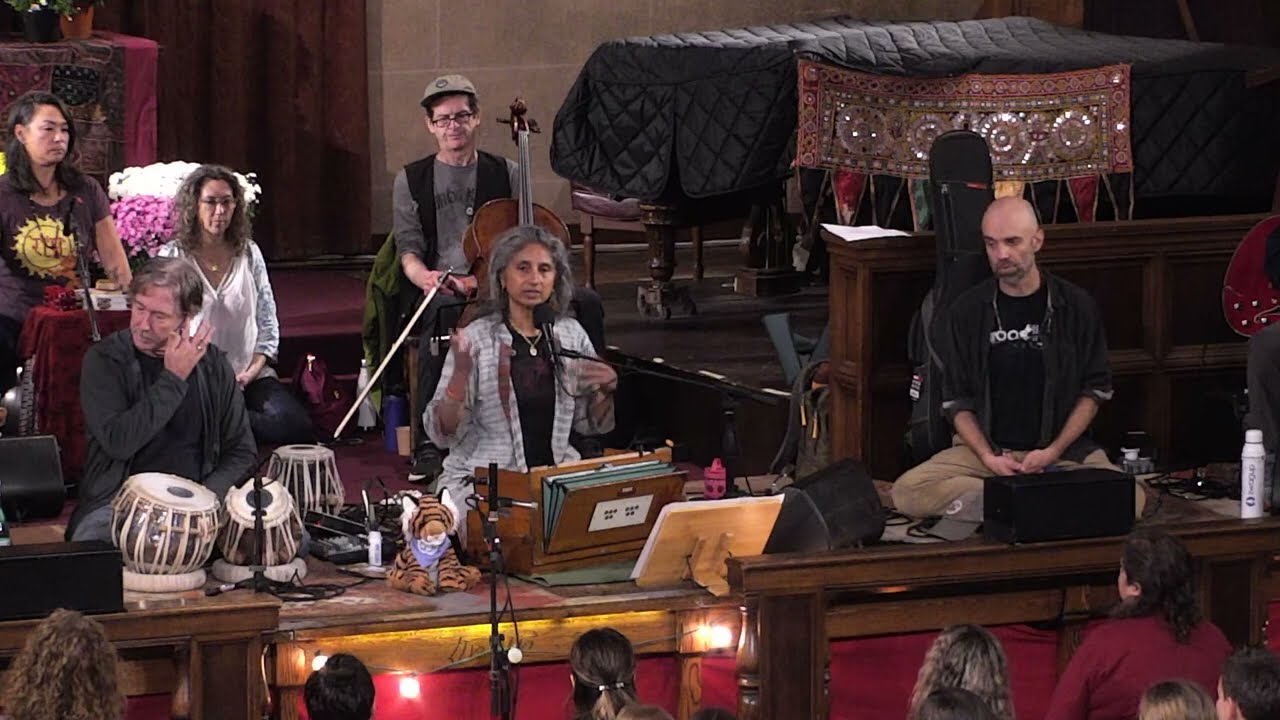
Krishna Das leads a free live kirtan session from the Art of Living Retreat Center in North Carolina as part of the 2025 Ram Dass Summer Mountain Retreat, themed around "Intimacy with All Things." The two-hour livestream showcases kirtan—devotional call-and-response chanting—as a practice for softening boundaries between self and other, opening the heart through mantras, music, and shared spiritual presence. Krishna Das, a lineage disciple of Neem Karoli Baba and longtime collaborator with Ram Dass, conducts the practice as an entry point for both beginners and experienced practitioners into bhakti yoga, the path of devotion.
What Is Kirtan and How Does It Open the Heart?
Kirtan is a form of call-and-response chanting rooted in bhakti yoga traditions, where a leader (often a musician) sings sacred Sanskrit mantras and devotional phrases, and participants echo or join in the singing. Unlike meditation practices that emphasize silence or stillness, kirtan uses sound, rhythm, and group participation to create a field of collective devotion. Krishna Das has spent decades refining this practice in the Western context, blending traditional Sanskrit mantras with contemporary musical arrangements—creating an accessible gateway for people unfamiliar with Hindu spiritual traditions to experience the heart-opening effects of chanting.
The practice works on multiple levels: physiologically, rhythmic chanting affects the nervous system, slowing breath and settling the mind; emotionally, repeating sacred names and phrases associated with divine qualities (love, presence, mercy) can shift one's internal state; spiritually, kirtan is understood in bhakti traditions as a direct method of connecting with the divine through sound and surrender. In the context of Ram Dass's teachings and the retreat's theme of "Intimacy with All Things," kirtan functions as a practice for softening the ego's defensive boundaries and cultivating a sense of connection with all beings.
How Does Krishna Das Teach Kirtan to Western Audiences?
Krishna Das is uniquely positioned to bridge Eastern kirtan traditions with Western seekers. Having spent years in India studying with Neem Karoli Baba (the guru who also guided Ram Dass), he returned to the United States with both deep lineage knowledge and a pragmatic understanding of Western spiritual culture. His approach to teaching kirtan strips away unnecessary complexity—he explains the meanings of mantras, guides participants through proper pronunciation, and emphasizes that the "correct" way to chant is simply to show up with an open heart. No prior knowledge of Sanskrit, India, or Hindu philosophy is required; the mantra itself carries the medicine.
In a retreat setting like this one, Krishna Das often begins by introducing a few core mantras (such as "Ram," "Krishna," or "Hanuman Chalisa"), teaching them line by line, and then gradually building the kirtan into a full musical experience with backing musicians, call-and-response sections, and extended periods where participants find their own voice within the collective sound. The livestream format democratizes this access—people can join from home, in a community gathering space, or in a group, removing barriers to participation that might otherwise exist.
What Does "Intimacy with All Things" Mean in the Context of Devotion?
The 2025 retreat's central theme—"Intimacy with All Things"—reflects a core teaching in both Ram Dass's work and traditional bhakti yoga: that the boundaries we perceive between ourselves and others, between the sacred and the ordinary, are largely illusory. In this view, the spiritual path involves progressively softening these boundaries through practices like kirtan, meditation, and selfless service. Intimacy with all things means recognizing that the same divine presence (whether called God, consciousness, love, or presence) animates everything—not as an intellectual concept, but as a lived, felt experience.
Kirtan supports this realization in concrete ways. When you sing a mantra like "Ram" (a name for divine consciousness) in a group, you are not singing alone—your voice mingles with hundreds of others, the melody intertwines with instruments, and for a moment, the distinction between self and other dissolves into shared sound and shared intention. This is what Ram Dass meant by "loving service"—practices that train the heart to recognize itself in all beings. Krishna Das's kirtan becomes a laboratory for this recognition, a safe container in which the defensive walls of the separate self can temporarily soften.
How Does Kirtan Fit Within Ram Dass's Broader Teaching?
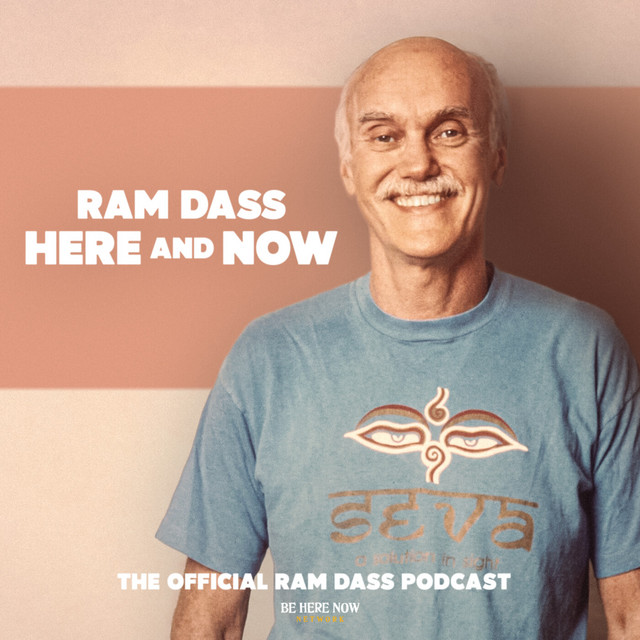
Ram Dass (formerly Richard Alpert), who passed away in 2019, spent decades exploring various spiritual paths—from psychedelics and psychology to Eastern philosophy and devotional practice. He ultimately integrated these into a teaching that emphasized presence, service, and love. For Ram Dass, kirtan was never peripheral; it was central. He would often lead or sit with Krishna Das during kirtan sessions, and his presence at these events reflected his conviction that chanting, music, and group spiritual practice were essential tools for awakening the heart.
The Ram Dass Summer Mountain Retreat carries forward this legacy. By featuring Krishna Das as the primary kirtan leader, alongside other teachers like Acharya Shunya, Dr. Robert Thurman, Nina Rao, East Forest, and David Nichtern, the retreat acknowledges that the path of devotion—kirtan, chanting, singing sacred names—is one of several valid approaches to spiritual realization. Some people are drawn to meditation and insight practices; others find their gateway through service and action; still others open through devotion and love. Kirtan is that devotional gateway, and Krishna Das has spent his life perfecting it as a teaching vehicle.
What Can Participants Expect from a Two-Hour Krishna Das Kirtan Session?
A typical Krishna Das kirtan session spans 90 minutes to two hours and follows a loose arc. It often begins with a brief introduction or invocation—sometimes a prayer or acknowledgment of the lineage. Krishna Das may share a short story, teaching, or intention to set the tone. Then he introduces the first mantra, usually something simple and accessible like "Hare Krishna, Hare Rama" or "Ram." He'll sing it line by line, and participants learn by repetition, gradually adding harmony, instrumentation, and energy.
As the session progresses, the kirtan typically builds—more musicians join in, the tempo may shift, and the chanting becomes more immersive. There may be moments of quietude, where the pace slows and the mood turns inward, followed by sections of joyful, exuberant chanting. Often, Krishna Das will intersperse longer passages where the group chants continuously for 10, 20, or even 30 minutes, creating a deep meditative state through repetition and rhythm. The session often concludes with a closing mantra or meditation, sometimes followed by "Jai," a Sanskrit exclamation of celebration or victory.
For participants, the experience is often described as moving, peaceful, and energizing—some feel waves of emotion (joy, release, or compassion), others describe a sense of peace or timelessness, and many report that the experience of singing together creates a tangible sense of connection. Because kirtan operates at the level of the heart and intuition rather than the intellect, people new to spiritual practice often find it accessible and profound immediately.
Why Offer This Kirtan for Free as Part of a Larger Retreat?
The decision to offer Krishna Das's kirtan as a free livestream reflects Ram Dass's long-standing commitment to accessibility and what he called "conscious service." Both Ram Dass and Krishna Das have emphasized that spiritual teachings should not be gatekept or available only to the wealthy. By offering the free kirtan livestream, the retreat organizers (the Love Serve Remember Foundation) honor this principle while also inviting people into a larger ecosystem of learning. Those who experience the free kirtan may be moved to participate in the full four-day retreat (available on a sliding scale), which includes additional teachings, meditations, and community sessions.
This model also reflects the understanding that kirtan itself is a complete practice—it's not merely entertainment or a prelude to "real" teaching. Two hours of Krishna Das kirtan, experienced fully, is sufficient spiritual nourishment for many people. The free livestream, then, functions both as a generous gift and as a gateway, introducing people to the retreat community and the teachers involved, while honoring the intrinsic value of kirtan as a standalone practice.
What Lineage Traditions Support Krishna Das's Kirtan Practice?
Krishna Das's authority and depth in kirtan stem from his connection to Neem Karoli Baba (1900–1973), a revered saint who embodied bhakti yoga in the Himalayan tradition. Neem Karoli Baba was known for his spontaneous love, radical compassion, and devotion to Hanuman (the Hindu deity symbolizing service and devotion). Many Western spiritual seekers found their way to Neem Karoli Baba in the 1960s and 1970s, including Ram Dass, whose spiritual awakening under this guru's guidance shaped his entire teaching career.
Krishna Das, too, spent formative years in India in the presence of Neem Karoli Baba, absorbing not just techniques for chanting but the spirit of bhakti—the understanding that devotion is not performative or sentimental, but a radical opening of the heart to the divine in all forms. This lineage connection gives Krishna Das's kirtan a certain authenticity and power; he is not simply playing with Sanskrit sounds or creating a therapeutic experience (though those may be side effects), but transmitting an ancient devotional lineage adapted for contemporary seekers.
Where to Go From Here
If you experience Krishna Das's free kirtan and wish to deepen your engagement, the Ram Dass Summer Mountain Retreat offers a full four-day program accessible on a sliding scale basis. The retreat includes live teachings from multiple teachers, additional kirtan sessions, meditations, and virtual community gatherings. You can explore the retreat at ramdass.org/summer.
Beyond the retreat, you can access Krishna Das's music through his albums (released over several decades), his podcast "Pilgrim Heart," and his social media presence where he shares kirtan recordings and teachings. Many cities host local kirtan circles and conscious music venues where you can experience kirtan in community settings. The key is consistent engagement: kirtan's benefits deepen with regular practice, so consider establishing a personal practice of listening to or singing kirtan at least weekly, either solo or in groups. Books by Ram Dass (such as "Be Here Now") and teachings about bhakti yoga can provide conceptual grounding for the heart-centered work that kirtan opens up.