EveryEvent Istanbul

Ver Todos los Events

Find every event in Istanbul

events

Concerts & Live Music
Festivals
Sports & Recreation
Food & Drink
Arts & Culture
Community
Family & Kids
Nightlife
Comedy
Theater
Destinos Populares
BaliSedonaLos AngelesCosta RicaNew YorkSan FranciscoAustinMiamiJoshua TreeTulum
Ver Todas las CategoríasVer Todos los Destinos

Explorar Todas las Características

Herramientas poderosas para hacer crecer tus eventos

Características de la Plataforma

Precios Dinámicos Inteligentes
Categorías de Entradas
Asientos Asignados
Recuperación de Carritos
Recuperación de Visitantes
Donaciones y Escala Móvil
Motor de Afiliados
Escáner de Entradas
Códigos de Cupón
Preguntas Personalizadas
Compartir Entradas
Ventas Adicionales
Análisis e Informes
Secuencias de Email
Lista de Espera / Notificar / Recordar
Explorar
Discovery HubArtists & PerformersVenuesKnowledge Base
Ver Todas las CaracterísticasSobre Nosotros
PreciosBlog
Language
Saved events
Ver Todos los Eventos

events

Concerts & Live MusicFestivalsSports & RecreationFood & DrinkArts & CultureCommunityFamily & KidsNightlife

Destinos Populares

BaliSedonaLos AngelesCosta RicaNew YorkSan Francisco

Explorar

Discovery HubArtists & PerformersVenuesKnowledge Base

Características de la Plataforma

Precios Dinámicos InteligentesCategorías de EntradasAsientos AsignadosRecuperación de CarritosRecuperación de VisitantesDonaciones y Escala MóvilMotor de AfiliadosEscáner de EntradasCódigos de CupónPreguntas PersonalizadasCompartir EntradasVentas AdicionalesAnálisis e InformesSecuencias de EmailLista de Espera / Notificar / Recordar
Ver Todas las CaracterísticasSobre Nosotros
PreciosBlog
Iniciar sesiónRegistrarseOrganizadores de Eventos
  • Browse All Events
  • Concerts & Live Music
  • Festivals
  • Sports & Recreation
  • Food & Drink
  • Arts & Culture
  • Community
  • Family & Kids
  • Nightlife
  • Todas las Categorías →
  • All Destinations →
  • For Promoters
  • For Artists
  • For Venues
  • For Festivals
  • For Event Spaces
  • For Nonprofits
  • For Bloggers
  • For Speakers
  • Brand Ambassador
  • Case Studies
  • Red de +350K Compradores
  • Recuperación de Carritos
  • Precios Dinámicos Inteligentes
  • Categorías de Entradas
  • Eventos Recurrentes
  • Asientos Asignados
  • Motor de Afiliados
  • Lista de Espera / Notificar
  • Escáner de Entradas
  • Widget Embebido
  • Sindicación de eventos
  • Centro de mensajes
  • Integraciones
  • Reportes
  • Todas las Características →
  • Acerca de
  • El ecosistema
  • Blog
  • Glosario
  • Inspiración
  • Centro de Ayuda
  • Contacto
  • Documentación API
  • Recursos de Marca
  • Carreras
  • Prensa
  • Términos de Servicio
  • Política de Privacidad

Events

  • Browse All Events
  • Concerts & Live Music
  • Festivals
  • Sports & Recreation
  • Food & Drink
  • Arts & Culture
  • Community
  • Family & Kids
  • Nightlife
  • Todas las Categorías →

Getaways

  • All Destinations →

For Organizers

  • For Promoters
  • For Artists
  • For Venues
  • For Festivals
  • For Event Spaces
  • For Nonprofits
  • For Bloggers
  • For Speakers
  • Brand Ambassador
  • Case Studies

Características

  • Red de +350K Compradores
  • Recuperación de Carritos
  • Precios Dinámicos Inteligentes
  • Categorías de Entradas
  • Eventos Recurrentes
  • Asientos Asignados
  • Motor de Afiliados
  • Lista de Espera / Notificar
  • Escáner de Entradas
  • Widget Embebido
  • Sindicación de eventos
  • Centro de mensajes
  • Integraciones
  • Reportes
  • Todas las Características →

Empresa

  • Acerca de
  • El ecosistema
  • Blog
  • Glosario
  • Inspiración
  • Centro de Ayuda
  • Contacto
  • Documentación API
  • Recursos de Marca
  • Carreras
  • Prensa
  • Términos de Servicio
  • Política de Privacidad
EveryEvent
© 2026 EveryEvent Istanbul. Todos los derechos reservados.
Inspiration

Chicken of the Woods:Foraging, Identification and Grilling

Paul Stamets
Paul Stamets
Sep 6, 2020
7 min de lectura
Ver · 6

Chicken of the Woods (Laetiporus conifericola in the Pacific Northwest) is a bright yellow-orange mushroom that grows in massive clusters on conifers and hardwoods. It genuinely tastes like chicken when properly cooked, but requires careful handling because the interior deteriorates quickly with bacterial colonization. The safest approach is to harvest the fresh edges, cut into strips, soak in a teriyaki-oil baste, and grill hard until the edges crisp—which also neutralizes any bacteria and creates a meat-like texture. A single cluster can yield over 100 pounds, making this one of the few mushrooms worth harvesting in industrial quantities.

Leer · 7 secciones

Why is Chicken of the Woods so easy to identify?

Unlike many mushrooms that blend into the forest floor, Chicken of the Woods announces itself visually. It belongs to a complex of species—Polyporus sulphureus—now classified in the genus Laetiporus. The most common species in the Pacific Northwest is Laetiporus conifericola, which literally means "conifer-loving." Its brilliant sulphur-yellow and orange coloring makes it visible from a distance, and it grows in substantial fruiting bodies that can weigh over 100 pounds in a single cluster. On the West Coast, it favors conifers—primarily Douglas firs and hemlocks—though it occasionally colonizes decomposed cedar. Other clade species, Laetiporus sulphureus and Laetiporus cinnatus, prefer hardwoods and grow across broader geographic ranges.

This visibility is deliberate from an ecological standpoint. Chicken of the Woods is a brown rot fungus that specializes in decomposing cellulose-rich wood. It colonizes both living trees (acting as a weak parasite) and dead or dying wood (growing saprophytically). Its cellulase enzymes are so efficient at breaking down cellulose that the mushroom can consume an entire standing tree or large log within a few years, leaving behind only cubic blocks of lignin—the indigestible structural polymer. The bright color serves as a visual advertisement to the ecosystem: here is active decay happening.

What does Chicken of the Woods actually taste like?

The common name is not marketing hyperbole. Chicken of the Woods tastes distinctly like chicken—specifically, white chicken meat. This similarity is most pronounced at the outer margin of the fruiting body, roughly the first two inches inward from the edge. The texture, when properly cooked, also mimics poultry: firm, meaty, and capable of taking on flavors in a way that woody or earthy mushrooms do not. This culinary quality has made it a favorite among both mycophiles and people skeptical about wild mushrooms generally. Stamets regularly surprises dinner guests who cannot believe they are eating a fungus rather than actual poultry.

The flavor works equally well in simple preparations or complex sauces. A basic teriyaki glaze, combined with olive oil, draws out the savory notes without overpowering the mushroom's inherent flavor profile. Unlike delicate mushrooms that require gentle handling during cooking, Chicken of the Woods actually improves when subjected to high heat—the exterior crisps, developing a darker brown crust that concentrates umami flavors and creates a satisfying textural contrast.

Why does Chicken of the Woods deteriorate so quickly?

This is the critical safety concern. Chicken of the Woods sours with bacteria very quickly, and this bacterial colonization is invisible to the naked eye until visible discoloration or soft spots appear. The interior of the fruiting body—as opposed to the fresh outer edges—becomes colonized with bacteria within days of fruiting. Consuming these bacterially compromised portions can cause gastrointestinal upset, which Stamets describes as ranging from mild indigestion to "a bubbly stomach" or more serious partial indigestion issues.

The safest protocol is to inspect the mushroom carefully upon arrival home and discard any portions showing browning, soft spots, or visible discoloration. Even if only a section is compromised, remove it completely. The edges—the outer one to two inches—remain the safest and most flavorful parts. This is actually fortunate, because the edges are where the chicken-like flavor is strongest.

How should Chicken of the Woods be cooked?

Stamets emphasizes that proper cooking is non-negotiable. Heat, particularly the high dry heat of a grill, serves two purposes: it develops flavor and neutralizes any residual bacteria. His preferred method involves these steps:

  • Cutting: Slice the mushroom into long strips, roughly finger-width or slightly wider. These strips cook evenly and display more surface area to the heat source.
  • Marinating: Soak the strips in a mixture of olive oil and teriyaki sauce. This can be done for as little as a few minutes or overnight in the refrigerator. Never soak at room temperature, which creates conditions for bacterial growth.
  • Grilling: Place strips on a very hot grill—hot enough to sizzle immediately upon contact. Stamets actually welcomes flaming at the edges because this achieves two outcomes simultaneously: it crisps the exterior (which brings out peak flavor) and it also renders the mushroom more meat-like in texture.
  • Cooking time: Grill for approximately one to two minutes total, flipping once after about one minute. The target appearance is a crispy brown exterior. Do not undercook.

The high heat approach also allows the mushroom to be served as finger food—a crispy, golden strip with a savory core. After cooking, the mushroom can be frozen and reheated later, making bulk harvesting practical for long-term storage.

How much Chicken of the Woods can a single fruiting yield?

This is one of the few wild mushrooms worth harvesting in large quantities. A single cluster can weigh over 100 pounds. This abundance creates both opportunity and responsibility. The harvester must be organized: selecting only the freshest portions, preparing them quickly, and having a plan for preservation. Freezing post-cooking is ideal, as it extends the shelf life for many months.

This abundance also reflects the mushroom's ecological role. Brown rot fungi are nature's recycling system for coniferous forests. A healthy population of Laetiporus species can consume fallen timber or weak trees at scale, returning woody biomass to soil faster than would occur through simple decay.

Can Chicken of the Woods be prepared methods other than grilling?

While Stamets expresses a clear preference for grilling—which he attributes to the superior crisping and meat-like texture—he acknowledges that sautéing is also viable. The key in any preparation is ensuring thorough cooking and avoiding any borderline-discolored portions. The grilling method is emphasized as optimal because the combination of high, dry heat and the ability to monitor the mushroom's color makes it easier to achieve proper doneness and develop the desired flavor profile.

The teriyaki-oil combination is a suggested starting point, but the mushroom's neutral, chicken-like character means it pairs with a wide range of flavor profiles—from simple salt and pepper to more complex marinades.

Where to go from here

Chicken of the Woods represents an accessible entry point into wild mushroom foraging for several reasons: it is visually unmistakable, abundant when it fruits, genuinely delicious, and forgiving in terms of cooking method (provided proper heat is applied). The main skill to develop is careful inspection and spoilage recognition—learning to identify the signs of bacterial colonization and having the discipline to discard compromised portions. Start by learning the conifers and hardwoods in your region where these mushrooms fruit, typically early summer through early fall. In the Pacific Northwest, focus on hemlocks and Douglas firs. Watch for the bright sulphur coloring from a distance, and when you find a cluster, inspect the edges first and harvest conservatively while leaving some fruiting body to continue supporting the fungal network.
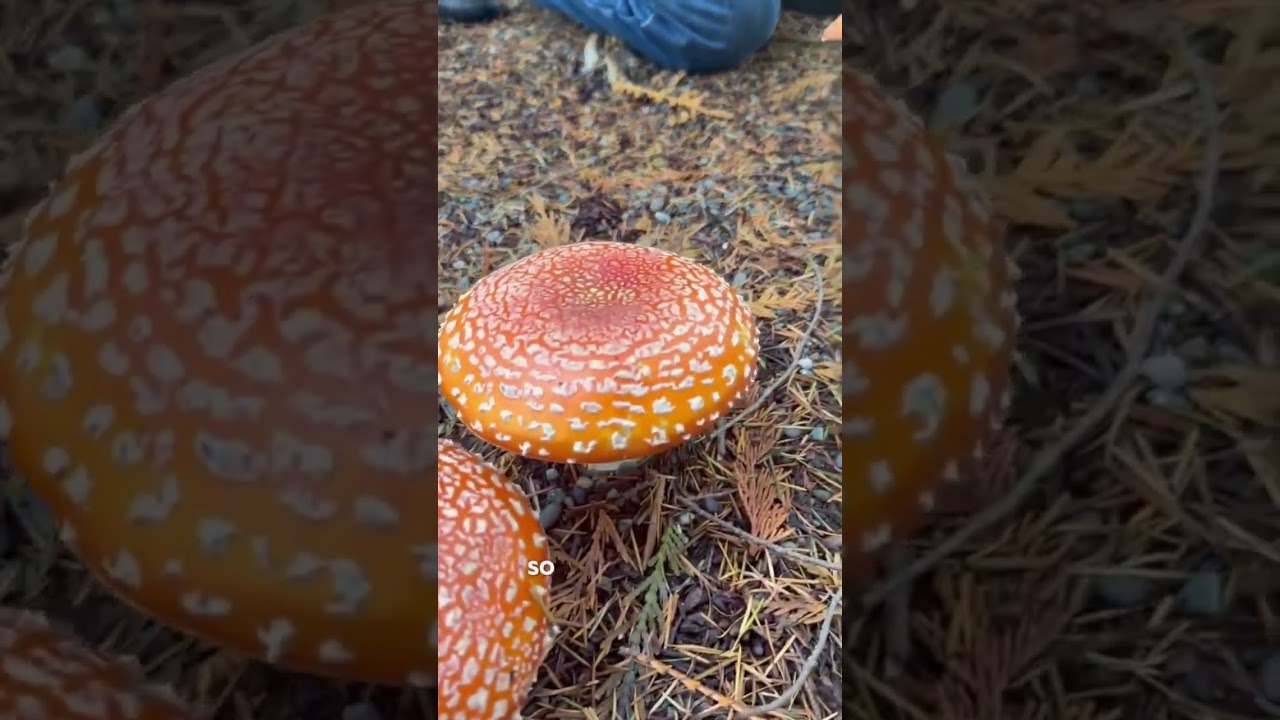
Transcript

[0:05] lots of mushrooms like to hide in the

[0:07] woods they're

[0:08] virtually invisible in the landscape but

[0:11] then there's a few exceptions

[0:13] and this is one that really shouts to be

[0:17] found

[0:18] um this is a chicken of the woods

[0:21] mushroom

[0:21] also known as the sulphur polypore

[0:25] um it has several latin names that used

[0:28] to be called polyps

[0:30] as the name implies a sulfur mushroom

[0:32] but

[0:33] now it's in the genus lithophorus and

[0:36] here in the northwest

[0:37] on these furs it's called lithophorus

[0:39] coniferricula

[0:40] uh conifer loving kind of furry nice

[0:43] tongue twister

[0:45] this mushroom is it tastes like chicken

[0:47] that's why it's called chicken of the

[0:48] woods

[0:48] especially on the first two inches of

[0:52] the margin

[0:53] but it sours with bacteria very quickly

[0:56] and so i caution you not to eat the

[0:58] interiors or where it's discolored

[1:00] and even here as signs of bacteria

[1:02] growing so

[1:04] this can cause gi upset make sure

[1:06] they're well cooked

[1:07] um i love these on the barbecue um

[1:10] basic little teriyaki sauce and they

[1:12] truly taste like white chicken

[1:14] um so this is a nice fruiting of it i

[1:17] think we'll just get a few of these

[1:18] leafs so to speak of the chicken of the

[1:21] woods we'll take it home and we'll have

[1:22] dinner tonight

[1:24] but what a bodaciously beautiful

[1:27] mushroom

[1:30] now that we collected our chicken from

[1:31] the woods and we've brought them home

[1:33] now it's time to cook them

[1:34] so in looking at cooking them i like to

[1:38] cut them in long slices like this

[1:41] and i'll show you why and these on the

[1:44] barbecue

[1:45] but here's one that i'm not too happy

[1:47] about this browning on the edges here

[1:50] is a little bit soft and so i would toss

[1:53] this one out

[1:54] you want to be extra careful with

[1:55] chicken of the woods because when they

[1:57] start

[1:58] to go bad they go bad quickly

[2:01] and some people have partial in

[2:04] digestion issues

[2:05] or kind of a bubbly stomach if they have

[2:09] some bacteria on them but if you well

[2:12] cook them it usually neutralizes that

[2:14] so we're going to go to the barbecue

[2:17] next

[2:18] but i've created a little concoction

[2:20] here

[2:21] of olive oil and teriyaki sauce

[2:25] and let me

[2:28] click there it goes

[2:34] and i'm going to stir this up

[2:44] not as missable as i expected but and

[2:48] then we put the

[2:49] the chicken of the woods in here and we

[2:52] kind of soak them

[2:56] and you can even soak these overnight if

[2:58] you wanted to in the refrigerator

[3:00] not at room temperature and

[3:03] once these are thoroughly covered then

[3:07] let's go to the barbecue

[3:11] okay we've basted the chicken of the

[3:13] woods with a

[3:14] teriyaki sauce a little olive oil and so

[3:17] this is

[3:17] quite hot so it's going to sizzle here

[3:26] spread them out and i actually do like

[3:29] this flaming here

[3:30] because i want to get them crispy it

[3:32] also

[3:33] makes them much more meat-like

[3:37] and spread them out i'm going to

[3:43] just wait a minute and then i'm going to

[3:45] be flipping them all

[4:01] so i'll cook them for about one minute

[4:03] and we'll come back in a second

[4:05] and then we'll serve them

[4:09] about one to two minutes later and this

[4:11] is what i look for is this

[4:13] crispy brown and that really brings out

[4:16] the flavor

[4:17] so that's it so

[4:24] bon appetit voila so here we are

[4:27] um and it's called chicken of the woods

[4:30] because it oh my gosh

[4:35] it tastes just like chicken

[4:38] um a great advantage of this mushroom

[4:40] also

[4:41] sometimes you can find 100 pounds in one

[4:43] cluster

[4:44] so you can saute these you know but i

[4:47] prefer on the grill as i showed you

[4:49] then after you cook it you can freeze

[4:50] them so you'll have these frozen

[4:52] chicken with the wood little sections

[4:56] you can consume

[4:57] for many months into the future this is

[5:00] really really really good so

[5:03] i think i might eat them all

[5:42] you

Paul Stamets
AutorPaul Stamets

Mycologist and advocate who has dedicated his life to studying mushrooms and their transformative potential to heal people and restore the planet through medicine, agriculture, and…

Ver perfilSitio web
Explorar temas
Chicken-of-woodsMushroom-foragingWild-ediblesMycologyGrilling

¿Tienes Preguntas?

Preguntas Frecuentes

Yes. Laetiporus species taste distinctly like white chicken meat, especially at the outer margin of the fruiting body. This similarity in flavor and texture is so pronounced that Stamets regularly surprises dinner guests who don't believe they're eating a mushroom rather than poultry.
Look for browning, soft spots, or discoloration on the surface. Bacterial colonization happens quickly and can cause gastrointestinal upset. Discard any portions showing these signs, and prioritize the fresh outer edges, which are safest and most flavorful.
Cut into long strips, soak in a teriyaki-oil marinade (can be overnight in refrigerator), then grill on high heat for 1-2 minutes per side until the edges crisp and brown. High heat both develops flavor and neutralizes any residual bacteria.
A single fruiting body can weigh over 100 pounds, making this one of the few wild mushrooms worth harvesting in large quantities. The mushroom can be cooked and frozen for months.
Laetiporus conifericola (conifer-loving species) is common in the Pacific Northwest on hemlocks and Douglas firs. Other clade species like L. sulphureus and L. cinnatus grow on hardwoods across broader geographic ranges. They typically fruit from early summer through early fall.
Yes, sautéing is viable, but Stamets prefers grilling because it crisps the exterior, develops better flavor, and creates a more meat-like texture. The key in any method is thorough cooking and avoiding any discolored portions.

Seguir leyendo

More from Paul

Ver Todo
Amanita Muscaria: History, Identification & Safety of Fly Agaric
Featured

Amanita Muscaria: History, Identification & Safety of Fly Agaric

Amanita muscaria, the fly agaric, has ancient roots in pest control and cultural mythology. Despite its striking beauty, this mushroom poses…

1 min read
Lactarius Deliciosus: Identifying & Foraging the Saffron Cap
Featured

Lactarius Deliciosus: Identifying & Foraging the Saffron Cap

The saffron milk cap (Lactarius deliciosus) is an easy-to-identify edible mushroom with striking green staining and orange milk. Learn how t…

1 min read
How Sitting Still Proves You're Already Awakening
Featured

How Sitting Still Proves You're Already Awakening

Most people can't sit quietly without discomfort, but if you can, you're already further along spiritually than you realize. Eckhart Tolle e…

1 min read
The Missing Piece: How Real Thinking Creates Real Results
Featured

The Missing Piece: How Real Thinking Creates Real Results

Most vision boards fail because people skip the actual thinking. Eckhart Tolle reveals the rhythm that unlocks insight and the two distinct …

1 min read

Sigue explorando

Continúa tu camino

Más sabiduría y encuentros de todo el directorio de BrightStar.

Más artículos

Recorre la biblioteca completa de enseñanzas, entrevistas y guías.

Ver todos los artículos →

Maestros y artistas

Explora los linajes, músicos y guías del mundo consciente.

Explorar artistas →

Encuentra un evento

Kirtan, retiros, baños de sonido, breathwork, festivales — muy pronto.

Ver eventos →