EveryEvent Istanbul

Ver Todos los Events

Find every event in Istanbul

events

Concerts & Live Music
Festivals
Sports & Recreation
Food & Drink
Arts & Culture
Community
Family & Kids
Nightlife
Comedy
Theater
Destinos Populares
BaliSedonaLos AngelesCosta RicaNew YorkSan FranciscoAustinMiamiJoshua TreeTulum
Ver Todas las CategoríasVer Todos los Destinos

Explorar Todas las Características

Herramientas poderosas para hacer crecer tus eventos

Características de la Plataforma

Precios Dinámicos Inteligentes
Categorías de Entradas
Asientos Asignados
Recuperación de Carritos
Recuperación de Visitantes
Donaciones y Escala Móvil
Motor de Afiliados
Escáner de Entradas
Códigos de Cupón
Preguntas Personalizadas
Compartir Entradas
Ventas Adicionales
Análisis e Informes
Secuencias de Email
Lista de Espera / Notificar / Recordar
Explorar
Discovery HubArtists & PerformersVenuesKnowledge Base
Ver Todas las CaracterísticasSobre Nosotros
PreciosBlog
Language
Saved events
Ver Todos los Eventos

events

Concerts & Live MusicFestivalsSports & RecreationFood & DrinkArts & CultureCommunityFamily & KidsNightlife

Destinos Populares

BaliSedonaLos AngelesCosta RicaNew YorkSan Francisco

Explorar

Discovery HubArtists & PerformersVenuesKnowledge Base

Características de la Plataforma

Precios Dinámicos InteligentesCategorías de EntradasAsientos AsignadosRecuperación de CarritosRecuperación de VisitantesDonaciones y Escala MóvilMotor de AfiliadosEscáner de EntradasCódigos de CupónPreguntas PersonalizadasCompartir EntradasVentas AdicionalesAnálisis e InformesSecuencias de EmailLista de Espera / Notificar / Recordar
Ver Todas las CaracterísticasSobre Nosotros
PreciosBlog
Iniciar sesiónRegistrarseOrganizadores de Eventos
  • Browse All Events
  • Concerts & Live Music
  • Festivals
  • Sports & Recreation
  • Food & Drink
  • Arts & Culture
  • Community
  • Family & Kids
  • Nightlife
  • Todas las Categorías →
  • All Destinations →
  • For Promoters
  • For Artists
  • For Venues
  • For Festivals
  • For Event Spaces
  • For Nonprofits
  • For Bloggers
  • For Speakers
  • Brand Ambassador
  • Case Studies
  • Red de +350K Compradores
  • Recuperación de Carritos
  • Precios Dinámicos Inteligentes
  • Categorías de Entradas
  • Eventos Recurrentes
  • Asientos Asignados
  • Motor de Afiliados
  • Lista de Espera / Notificar
  • Escáner de Entradas
  • Widget Embebido
  • Sindicación de eventos
  • Centro de mensajes
  • Integraciones
  • Reportes
  • Todas las Características →
  • Acerca de
  • El ecosistema
  • Blog
  • Glosario
  • Inspiración
  • Centro de Ayuda
  • Contacto
  • Documentación API
  • Recursos de Marca
  • Carreras
  • Prensa
  • Términos de Servicio
  • Política de Privacidad

Events

  • Browse All Events
  • Concerts & Live Music
  • Festivals
  • Sports & Recreation
  • Food & Drink
  • Arts & Culture
  • Community
  • Family & Kids
  • Nightlife
  • Todas las Categorías →

Getaways

  • All Destinations →

For Organizers

  • For Promoters
  • For Artists
  • For Venues
  • For Festivals
  • For Event Spaces
  • For Nonprofits
  • For Bloggers
  • For Speakers
  • Brand Ambassador
  • Case Studies

Características

  • Red de +350K Compradores
  • Recuperación de Carritos
  • Precios Dinámicos Inteligentes
  • Categorías de Entradas
  • Eventos Recurrentes
  • Asientos Asignados
  • Motor de Afiliados
  • Lista de Espera / Notificar
  • Escáner de Entradas
  • Widget Embebido
  • Sindicación de eventos
  • Centro de mensajes
  • Integraciones
  • Reportes
  • Todas las Características →

Empresa

  • Acerca de
  • El ecosistema
  • Blog
  • Glosario
  • Inspiración
  • Centro de Ayuda
  • Contacto
  • Documentación API
  • Recursos de Marca
  • Carreras
  • Prensa
  • Términos de Servicio
  • Política de Privacidad
EveryEvent
© 2026 EveryEvent Istanbul. Todos los derechos reservados.
Inspiration

Agarikon Mushroom: Ancient MedicineMeets Modern Antiviral Research

Paul Stamets
Paul Stamets
May 14, 2020
7 min de lectura
Ver · 7

Agarikon (Fomitopsis officinalis, also known as Laricifomes officinalis) is a rare, slow-growing mushroom found almost exclusively in old-growth forests that has been used for thousands of years in traditional medicine across Europe and the Pacific Northwest. Modern mycological and pharmaceutical research has validated its potent antiviral, antibacterial, and anti-tuberculosis properties. Scientists have isolated novel bioactive compounds including chlorinated coumarins effective against drug-resistant tuberculosis and anti-smallpox molecules more potent than existing antivirals. This species is threatened with extinction in Europe and faces pressure from habitat loss, making strain preservation and sustainable research a critical conservation priority.

Leer · 8 secciones

What is Agarikon and where does it grow?

Agarikon is a bracket fungus (conk) that grows almost exclusively in old-growth forests of the Pacific Northwest (northern California, Oregon, Washington, and British Columbia) and is also found in a few isolated "sky islands" in the Alps of Austria and Slovenia. The mushroom is one of the longest-living fungi in the world, with some specimens reaching up to 100 years old. Unlike fast-fruiting mushroom species, Agarikon requires the complex microhabitat and nutrient cycles of mature forest ecosystems to thrive. The species exists in two color forms: a brown "quinine form" and a rare white "ghost form," though the white form carries risks that require careful handling and study.

How long have humans used Agarikon?

The earliest documented evidence of Agarikon use dates to 65 A.D., when it appears in Dioscorides' materia medica as "electrium et longhum vitum," literally "the elixir of long life," where it was specifically prescribed for consumption—what modern medicine now recognizes as tuberculosis. Beyond written European medical history, indigenous peoples of the Pacific Northwest revered Agarikon as a sacred ally. Shamans would carve the mushroom into grave guardian figures to facilitate the passage of healers into the afterlife. Both shamanic and medical traditions held the same fundamental concept: that diseases arise from invisible agents—what shamans called "spirits" and what physicians later identified as microbes. This convergence across cultures and centuries suggests Agarikon's pharmacological effects were real and observable long before laboratory verification.

What antiviral and antibacterial compounds have been discovered in Agarikon?

Modern research has identified multiple classes of bioactive molecules in Agarikon with potent antimicrobial properties. Working with Dr. Scott Franzlau at the University of Illinois Chicago's Tuberculosis Research Center, researchers used bio-guided fractionation to isolate the mushroom's active constituents. This process involves systematically testing mycelium extracts across a range of solvents—from water (the most polar) to hexane (nonpolar)—to determine which fractions increase anti-tuberculosis activity. Over several years of this methodical approach, the team discovered a group of chlorinated coumarins published in the Journal of Natural Products. These compounds are highly active against XDR (extensively drug-resistant) and multi-drug-resistant strains of tuberculosis—pathogens that have become resistant to conventional antibiotic regimens.

In collaboration with the U.S. Defense Department's BioShield program, researchers investigated mycelial extracts prepared simply by soaking mycelium in water and ethanol. After polysaccharides precipitated out, the clear supernatant liquid demonstrated extremely potent activity against pox viruses, herpes viruses, and influenza viruses. Working with the University of Mississippi School of Pharmacy and Dr. Samira Ross, biomedical scientists conducted further fractionation and discovered two novel anti-smallpox molecules that are more potent than cidofovir, the current standard antiviral for smallpox. These molecules have been made open-source specifically to support pandemic preparedness and ensure humanity has access to this knowledge. While the specific anti-flu and anti-herpes active molecules have not yet been fully characterized, the evidence is clear: Agarikon presents a vast reservoir of pharmacologically active agents.

Why is extraction method critical when working with Agarikon?

While Agarikon's mycelium (the vegetative fungal tissue) has demonstrated safety in multiple research protocols, the fruiting bodies (the visible conks) require caution. There is one documented anecdotal report from a First Nations shaman who ingested large quantities of the white "ghost form" of Agarikon and experienced temporary blindness. This case demonstrates that fruiting body extracts may contain compounds with significant bioactivity that can produce adverse effects if not properly understood or dosed. In contrast, the mycelium—the branching fungal network that colonizes wood—has shown consistent safety profiles in laboratory and traditional use. This distinction is critical: extracts intended for therapeutic use should be derived from cultivated mycelium, not from harvested fruiting bodies. The difference reflects how the fungus concentrates and metabolizes compounds across its life cycle.

How is Agarikon being sustainably harvested and preserved?

Because Agarikon is threatened with extinction in European ecosystems and only grows in old-growth forests, conservation and sustainable collection practices are essential. Current collection protocols prioritize preservation over exploitation. Mushrooms are harvested only from forests that are designated for logging or face other immediate threats, ensuring that collection does not drive additional habitat destruction. Even in these cases, harvesters take only small tissue fragments—less than the size of a fingernail—from the substrate (usually dead logs or standing snags), allowing the living mycelium network to continue thriving and fruiting for decades to come.

Beyond field preservation, Agarikon strain preservation is a central research goal. Over decades of work, more than 60 distinct strains have been collected and maintained for comparative study. The lifetime aim is to preserve 100 strains, allowing future researchers to investigate strain-specific variations in bioactivity, growing conditions, and medicinal applications. This approach recognizes that Agarikon is not a uniform species: genetic and environmental variation likely produces different phytochemical profiles, and preserving diverse strains ensures that multiple biological pathways and compounds remain available for investigation.

What is the relationship between ecosystem health and zoonotic disease emergence?

A fundamental principle underlying Agarikon research is that healthy, diverse habitats provide innate immunity—both for the ecosystems themselves and for the humans who depend on them. As habitats are destroyed and ecosystems become stressed, the conditions that favor zoonotic disease spillover intensify. Stressed animal populations, fragmented forests, and ecological imbalance create pathways for pathogens to jump from wildlife to humans. By contrast, intact old-growth forests with their complex understory, diverse microbiota, and balanced nutrient cycles produce organisms like Agarikon—medicines that our ancestors empirically discovered could defend against disease. The destruction of these forests removes both the habitats that harbor natural pharmaceutical compounds and the ecological resilience that prevents disease emergence in the first place. This creates a double burden: habitat loss removes our access to natural antimicrobial allies while simultaneously increasing the likelihood of epidemic disease.

Why is Agarikon conservation a matter of human survival?

The species and strains of fungi and plants that remain undocumented, unstudied, and unmapped represent incalculable potential for addressing both current and future health crises. Agarikon demonstrates this principle concretely: a mushroom known to Dioscorates in 65 A.D. for treating consumption has now been shown through 21st-century biomedical research to contain molecules active against drug-resistant tuberculosis, smallpox, herpes, and influenza. If this single species had been driven to extinction through habitat destruction before modern research tools could examine it, humanity would have lost access to novel antiviral compounds we are only now beginning to understand. Ancient peoples knew this mushroom empirically through thousands of years of experimentation and cultural transmission. Modern science is now validating and extending that knowledge, revealing the biochemical mechanisms behind traditional uses and discovering new applications. The latitude and elasticity of Agarikon's applications—its ability to address multiple disease categories across centuries and across cultures—speak to its intrinsic value as both a biological entity and a potential medicine.

Where to go from here

The future of Agarikon research lies in several directions: expanding strain preservation and comparative analysis to understand genetic and phytochemical variation; characterizing the anti-flu and anti-herpes molecules that remain unidentified; investigating the mechanisms by which chlorinated coumarins overcome multidrug-resistant tuberculosis; and exploring potential synergistic effects between different bioactive compounds. At the conservation level, protecting remaining old-growth forest populations and documenting the species' range and status in each region is urgent, particularly in Europe where extinction risk is highest. For individuals interested in supporting this work, the most direct path is through organizations dedicated to mycological research and old-growth forest preservation. The work calls on both scientific rigor and ancestral wisdom: respecting the knowledge that indigenous peoples and ancient healers accumulated over millennia, while applying modern investigative tools to unlock mechanisms and applications that could serve humanity for generations to come.
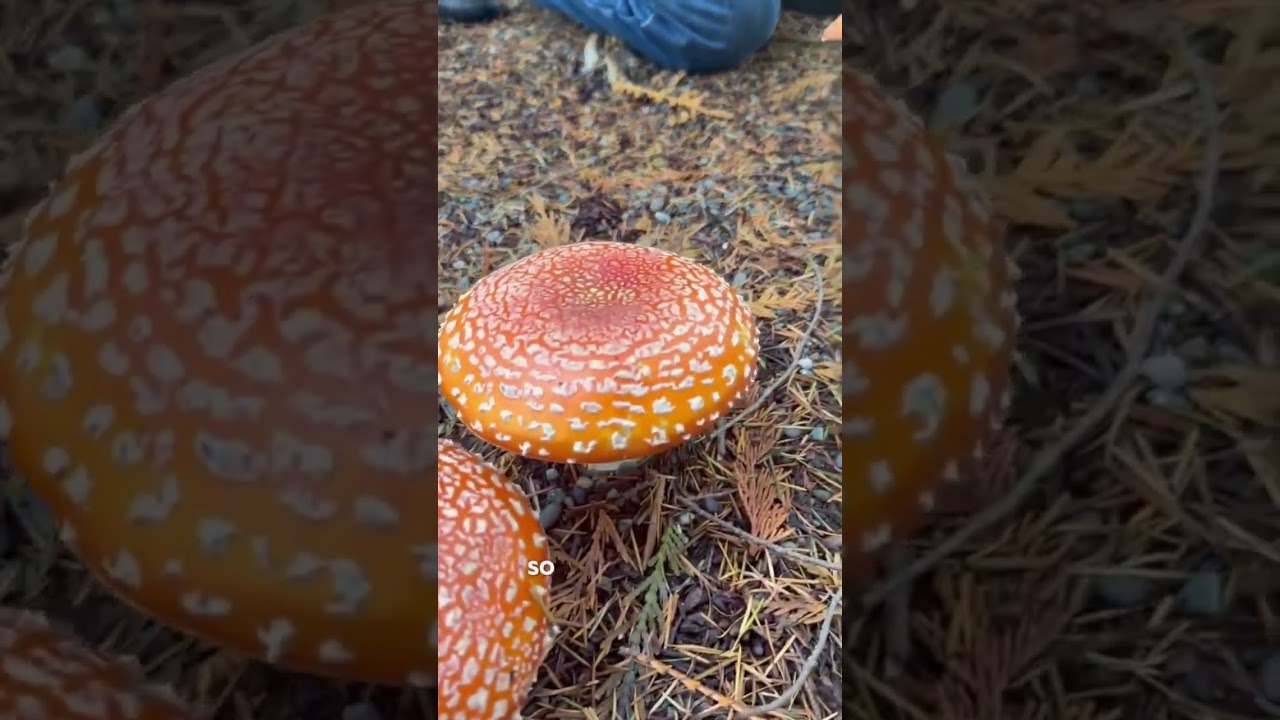
Transcript

[0:02] hi folks i'm going to do a deep dive

[0:04] um it's sort of an immersion in some of

[0:06] the knowledge about a gericon that we

[0:08] have present

[0:09] and the potential of a gyrocon for many

[0:11] new discoveries

[0:13] the first evidence of a gericon we have

[0:15] is from diasca varieties in 65 a.d in

[0:17] the very first materia medica

[0:19] in which diocerates described this as

[0:21] electrium at longham vitum

[0:23] the elixir of long life specifically

[0:25] used for treatment of consumption

[0:28] later thought to be known as

[0:29] tuberculosis well

[0:31] indigenous peoples also revered this

[0:33] mushroom

[0:34] and would carve this mushroom into grave

[0:35] guardians to help shamans go into the

[0:37] afterlife

[0:38] now whether you're a physician or a

[0:39] shaman you hold in common the concept

[0:41] that diseases can be caused by the

[0:44] invisible

[0:45] shamans will call them spirits doctors

[0:47] will call them microbes

[0:49] in this case we know this mushroom has

[0:50] very very potent antibacterial antiviral

[0:53] properties

[0:54] with dr scott franzlau at the university

[0:56] of illinois chicago tuberculosis

[0:58] research center we have discovered

[1:00] through bio-guided fractionation

[1:02] taking the mycelium and these mushrooms

[1:05] and

[1:06] by doing a decision tree of using

[1:08] solvents

[1:09] we go down water being the most polar

[1:12] solvents using hexane which is

[1:13] a nonpolar and then we testifies this

[1:16] fraction to see if the increase in the

[1:17] anti-tuberculosis activity

[1:20] occurred then we followed the decision

[1:22] tree that leads us to increased potency

[1:24] they did this over several years and

[1:26] then we finally found a group of

[1:27] chlorinated cumerons

[1:29] that are published in the journal of

[1:30] natural products

[1:32] being these chlorinated coumarins are

[1:33] highly active against xdr

[1:35] multi drug resistant strains of

[1:36] tuberculosis moreover

[1:39] working with the bioshield program the

[1:40] us defense department

[1:42] we discovered that the mycelial extracts

[1:45] just simple mycelium put into water and

[1:46] ethanol

[1:47] when we took the supernatant after the

[1:49] polysaccharides that

[1:50] precipitated the supernatant the clear

[1:52] fluid at the top

[1:54] of these vessels had within them

[1:55] extremely potent properties against pox

[1:58] viruses

[1:59] herpes as well as flu viruses working

[2:01] with the university

[2:02] of mississippi school of pharmacy with

[2:04] dr samira ross

[2:06] and his team they did bio-guided

[2:08] fractionation and lo and behold we found

[2:10] two

[2:10] novel anti-smallpox molecules

[2:14] and these molecules are more potent than

[2:16] cydofever

[2:18] and these molecules are open sourced

[2:20] because hopefully we'll never have a

[2:21] smallpox pandemic

[2:23] the anti-flu molecules have not been

[2:25] discerned nor the anti-herpes molecules

[2:28] but the point is this mushroom is a deep

[2:30] reservoir of pharmacologically active

[2:32] agents

[2:32] dually active against flu viruses and

[2:35] pox virus and herpes viruses

[2:36] as well as against tuberculosis bacteria

[2:39] staph bacteria

[2:40] and e coli and i think this mushroom

[2:43] presents a fantastic bio shield of

[2:45] defense

[2:46] ancient peoples knew this empirically

[2:49] through thousands of years of

[2:50] experimentation

[2:51] and now modern science is understanding

[2:53] this better

[2:55] this is the form that's a brown form and

[2:57] it goes into the quinine form the white

[2:59] form

[3:00] and behind me was

[3:03] a white form of aguero khan known as the

[3:06] ghost form

[3:07] now the quinine form has reported

[3:09] throughout the literature being used in

[3:10] tinctures etc

[3:11] we do have one anecdotal report from a

[3:14] first nations

[3:15] shaman who ingested the white form in

[3:18] large quantities and reported temporary

[3:20] blindness so i caution people not to

[3:22] make extracts out of the fruit bodies

[3:24] the mycelium is a whole another matter

[3:26] and this mushroom is considered to be

[3:28] endangered in some ecosystems because

[3:30] it's only associated with old growth

[3:32] forests of the pacific northwest

[3:33] northern california oregon washington

[3:35] and british columbia and a few sky

[3:37] islands in austria and slovenia

[3:39] in the alps so another example that the

[3:42] biodiversity of our ecosystems have

[3:44] within them a wealth of potential

[3:47] solutions uh to the diseases that

[3:50] afflict us today and the diseases that

[3:51] afflict us in the past

[3:53] so i think this mushroom has enormous

[3:55] potential

[3:56] for further research we are dedicated to

[3:59] exploring it more

[4:00] and the latitude the elasticity of

[4:03] applications of this mushroom

[4:04] i really speak to its intrinsic value

[4:08] that's it thank you very much

Paul Stamets
AutorPaul Stamets

Mycologist and advocate who has dedicated his life to studying mushrooms and their transformative potential to heal people and restore the planet through medicine, agriculture, and…

Ver perfilSitio web
Explorar temas
Agarikon-mushroomAntiviral-compoundsTuberculosis-resistanceMycology-researchOld-growth-forests

¿Tienes Preguntas?

Preguntas Frecuentes

Agarikon contains chlorinated coumarins effective against drug-resistant tuberculosis and novel anti-smallpox molecules more potent than cidofovir. Research also documents potent antiviral activity against herpes, influenza, and pox viruses, though not all active compounds have been fully characterized.
Agarikon is endangered and should only be harvested from forests designated for logging or immediate threat. Sustainable collection involves taking only small tissue fragments (less than a fingernail) rather than entire fruiting bodies, allowing the mycelium to continue thriving.
Mycelium extracts have shown safety in research protocols. However, fruiting body extracts carry risk—one documented case involved temporary blindness from ingesting large quantities of the white form. Only mycelium-derived preparations should be considered for therapeutic use.
Agarikon grows almost exclusively in old-growth forests of the Pacific Northwest (California, Oregon, Washington, British Columbia) and isolated high-altitude forests (sky islands) in Austria and Slovenia. It requires mature forest ecosystems and can live 100 years.
Agarikon appears in Dioscorides' materia medica from 65 A.D., where it was called 'electrium et longhum vitum' (the elixir of long life) and used to treat consumption (tuberculosis). Indigenous peoples also revered it as a sacred medicine.
Different strains likely produce varying phytochemical profiles and bioactivity. Preserving 100 genetically distinct strains ensures researchers can investigate strain-specific variations and that multiple biological pathways remain available for future therapeutic discovery.
Mycelium (vegetative tissue) is safe for extraction and research, while fruiting bodies require caution due to high concentrations of bioactive compounds. The white 'ghost form' fruiting body has caused adverse effects in documented cases.

Seguir leyendo

More from Paul

Ver Todo
Amanita Muscaria: History, Identification & Safety of Fly Agaric
Featured

Amanita Muscaria: History, Identification & Safety of Fly Agaric

Amanita muscaria, the fly agaric, has ancient roots in pest control and cultural mythology. Despite its striking beauty, this mushroom poses…

1 min read
Lactarius Deliciosus: Identifying & Foraging the Saffron Cap
Featured

Lactarius Deliciosus: Identifying & Foraging the Saffron Cap

The saffron milk cap (Lactarius deliciosus) is an easy-to-identify edible mushroom with striking green staining and orange milk. Learn how t…

1 min read
How Sitting Still Proves You're Already Awakening
Featured

How Sitting Still Proves You're Already Awakening

Most people can't sit quietly without discomfort, but if you can, you're already further along spiritually than you realize. Eckhart Tolle e…

1 min read
The Missing Piece: How Real Thinking Creates Real Results
Featured

The Missing Piece: How Real Thinking Creates Real Results

Most vision boards fail because people skip the actual thinking. Eckhart Tolle reveals the rhythm that unlocks insight and the two distinct …

1 min read

Sigue explorando

Continúa tu camino

Más sabiduría y encuentros de todo el directorio de BrightStar.

Más artículos

Recorre la biblioteca completa de enseñanzas, entrevistas y guías.

Ver todos los artículos →

Maestros y artistas

Explora los linajes, músicos y guías del mundo consciente.

Explorar artistas →

Encuentra un evento

Kirtan, retiros, baños de sonido, breathwork, festivales — muy pronto.

Ver eventos →