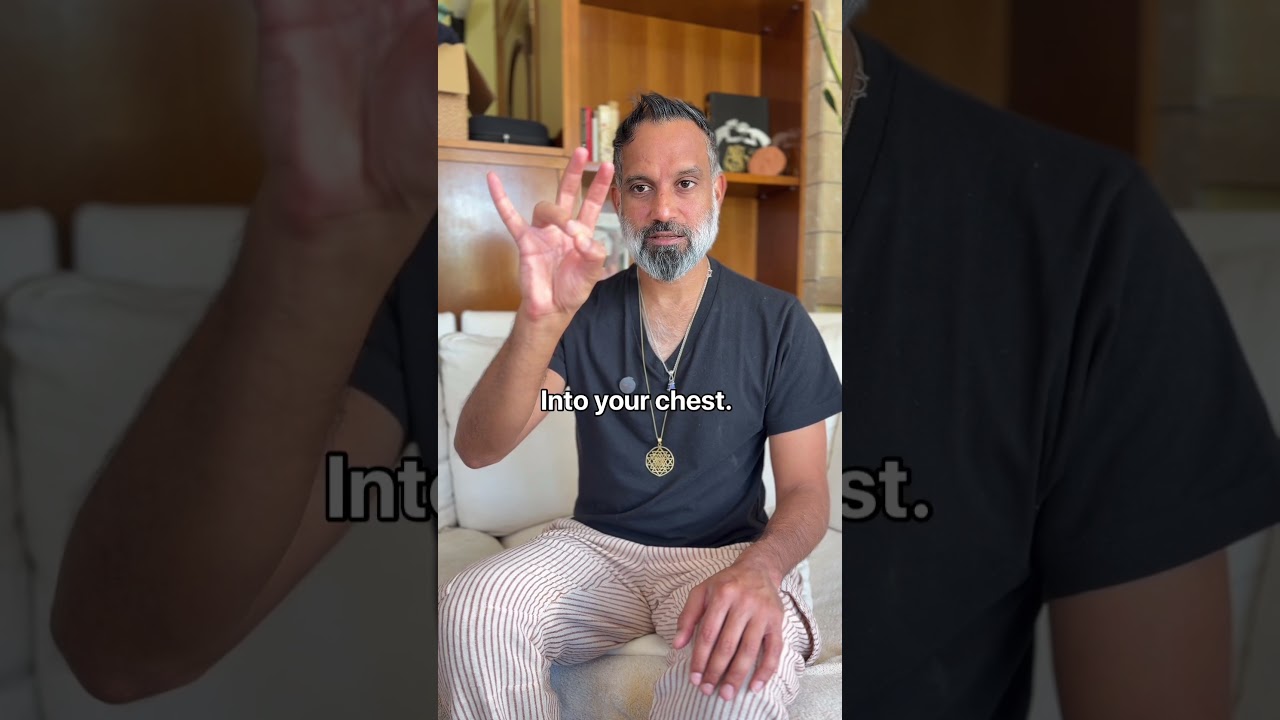
TLDR: SOMA Awakening Breathwork is a guided meditation technique that uses rhythmic breathing synchronized to music, pelvic floor (mula bhanda) contractions, breath-holding, and controlled oxygen reduction (hypoxia) to trigger a positive physiological stress response. Practiced once or twice daily, it activates heart coherence—a state where all body functions synchronize—and generates sensations of euphoria, creative energy, and elevated vibrational states. The practice involves four distinct phases: rhythmic breathing, energy lock contractions, hypoxic hold (where blood oxygen dips to 50–70%), and toning or vocalization to distribute the activated energy throughout the body. Niraj Naik, founder of SOMA Breath, frames this as a method to rewire the nervous system and access deeper states of consciousness.
What is Heart Coherence and Why Does Rhythmic Breathing Create It?
The foundation of SOMA Awakening Breathwork rests on a physiological state called heart coherence. Naik explains that when you breathe in a consistent, rhythmical pattern—matching the beat of the accompanying music—your nervous system enters a synchronized state where all functions in the body harmonize. This is not poetic language but a specific nervous system response: rhythmic breathing signals to your heart rate variability, blood pressure, and hormonal cascade to operate in coherence rather than fragmentation.
The music used in SOMA practice is deliberately composed so you can hear the inhale and exhale rhythm embedded within it. As Naik guides: "the key is just to keep it very consistent and regular. Rhythmical, that is the key for heart coherence what this rhythmic breathing does is it gets you into this physiological state called heart coherence this harmonises all of the functions in the body" (2:31–2:49). This rhythmic entrainment moves practitioners from a low-energy, fragmented nervous state toward a higher-energy, coherent state.
The technique uses deep yogic breaths where the abdomen visibly rises and then falls. On the exhale, many practitioners add a vocalization—a sigh, a continuous tone, or an "ffffff" sound like an ocean wave. Naik emphasizes that the vocalization itself deepens relaxation with each exhale: "A sight of good feelings. This actually allows you to get even more into relaxation with every exhale" (2:01–2:07). This auditory feedback loops the nervous system deeper into parasympathetic (relaxation) response even as the breathing pattern begins to build intensity.
How Do Mula Bhanda Contractions Build and Direct Energy?
Once rhythmic breathing is established, practitioners introduce mula bhanda—a yogic energy lock involving contraction of the pelvic floor muscles. Naik instructs practitioners to start contracting the mula bhanda at the top of the inhale and release it on the exhale: "Start to contract the Mula Bhanda at the top of his inhale. And letting go on his exhale, pulsing it" (4:51–5:00). This pulsing action is repeated with the breath rhythm.
The physiological effect is twofold. First, the pelvic floor contraction engages the deep stabilizer muscles of the core and activates what Naik calls "sexual energy"—not in a genital sense alone, but as a form of creative life-force activation. He states: "This starts stimulating the sexual energy Start feeling this energy build up inside, tingling sensations moving around your body Start feeling some euphoric sensations" (5:34–5:49). As the mula bhanda pulses in rhythm with the breath, practitioners report tingling, euphoria, and rising vibrational energy.
The second function is directional: the contraction of the pelvic floor acts as a valve, trapping and concentrating energy rather than allowing it to dissipate. Later in the practice, when a more intense breath-hold is applied, the mula bhanda serves as a lock to prevent the release of breath and to facilitate the internal movement of that activated energy upward through the spine.
What Happens During the Hypoxic Hold, and Why Is It Safe?
The centerpiece of SOMA Awakening Breathwork is the hypoxic hold—a deliberately induced state of reduced blood oxygen. Naik explains the mechanism: when the practitioner takes a final deep inhale and then a complete exhale, they hold the breath while maintaining the neck lock (jalandhara bhanda in yoga terminology). The pulse oximeter worn during instruction drops from normal oxygen saturation (95–100%) down to 85%, then to the 70s, 60s, and potentially into the 50s.
Naik introduces hypoxia as the trigger for therapeutic change: "when this goes below 90 around 85% and below what will happen is it will trigger this intermittent hypoxic state where this positive stress response happens and all the magic happens in the physiology" (0:15–0:32). The key word is intermittent—the body is not chronically starved of oxygen but rather exposed to a controlled, time-limited reduction that activates adaptive survival mechanisms.
During hypoxia, the body releases a cascade of chemicals: adrenaline, noradrenaline, endorphins, and other neuropeptides that create euphoria, heightened mental clarity, and a sense of expanded consciousness. Naik narrates the oxygen levels during a live demonstration, calling out: "80, 79, 77, 75 Doing a great job, 73, 72 amazing! 69, 68, he's in the 60s, doing amazing. Now the magic of this hypoxic state is creating a positive stress response in the body" (5:06–5:30). This "positive stress" is what the practice depends on—mild physical challenge that the nervous system adapts to and strengthens.
To maintain hypoxia without causing panic, practitioners use small strategic inhales followed by full exhales, keeping the oxygen level suppressed: "He takes a small inhale and then full exhale again to maintain this hypoxic state relaxing keeping the neck lock letting the neck drop down" (5:37–5:50). The neck lock (chin dropping forward) is crucial—it prevents additional air from entering the lungs during the hold. Naik advises: "allowing your neck just to relax and your chin may drop forward, this creates an energy lock, a the neck lock that prevents any more air entering your lungs" (4:44–4:55).
For beginners, Naik recommends not obsessing over reaching very low oxygen percentages: "when you first do this you were worry too much if you don't reach these sorts of levels as it takes practice, Orlando has been doing the sometimes already several months" (5:88–5:97). The adaptation is gradual, and safety increases with repetition as the nervous system learns to remain calm during the challenge.
What Is the Role of the Neck Lock and Energy Locks?
The SOMA system employs multiple "energy locks" borrowed from tantric and yogic traditions. The neck lock (jalandhara bhanda) and the pelvic lock (mula bhanda) are the two primary ones. These locks serve both a mechanical and an energetic function. Mechanically, they seal the breath and prevent unintended air from entering during the hold. Energetically, they redirect the activation and sensations within the body rather than allowing them to dissipate outward.
Naik explains the visualization that accompanies these locks: "imagine you're like drawing up all the energy from your sex up through your spine up into your head, boom!!! illuminating your head" (6:22–6:29). This language draws from kundalini yoga, where practitioners visualize life force moving upward along the central energy channel (sushumna nadi). Whether one takes this literally or as a useful metaphor for redirecting attention and activating the nervous system, the locks appear to concentrate sensation and euphoria in the head and upper chakras during the practice.
Naik also notes that the sitting position with spine straight is intentional: "for the first two weeks at least try and do this sitting up if you can because that will allow the energy to move more freely through you and it also allows you really connect deeply with your energy within because of the various energy locks that we'll be applying doing this" (7:2–8:9). Upright posture facilitates this directional flow and prevents the practitioner from collapsing into the floor, which might interrupt the internal movement of sensation.
What Happens During the Toning and Integration Phase?
Once the hypoxic hold reaches a natural limit—when the urge to breathe becomes overwhelming—the final phase begins: toning or vocalization. Naik describes the transition: "You're going to get this big urge to breathe fully inhale and you're gonna squeeze your mula bhanda, put your neck down and you can even suck in your abdomen slightly" (6:05–6:17). This final breath and contraction can generate an intense euphoric release.
Then comes the toning: "you let out a nice tone when you can't hold your breath any longer" (6:62–6:67). This vocalization—whether a prolonged "ohhhh," a laugh, a sigh, or a humming sound—appears to distribute the activated energy throughout the body rather than keeping it localized. Naik explains: "toning allows this energy to spread all around the body" (the description suggests this occurs after the oxygen levels return to normal).
The toning phase often includes visualization of the third eye or pineal gland. Naik guides: "you can even imagine looking up into your mind's eye with your eyes closed, your eyes pointing towards your third eye or pineal gland like this, with your eyes shut you can just visualize colors in your mind's eye right now, sensations and lights You may even see visions you may have some thoughts and new ideas that emerge as you do this" (6:62–6:92). This suggests that the elevated state—high blood oxygen returning rapidly, plus the euphoric neurochemical cascade—creates a window for visionary or creative insight.
How Often Should You Practice SOMA Awakening Breathwork?
Naik recommends practicing once or twice per day: "By doing this breathwork routine once or twice per day, you will see a difference in your life quite fast" (from the YouTube description). The cumulative effect appears to be nervous system recalibration. Each session teaches the body to adapt to hypoxia, to generate coherence through rhythm, and to access higher arousal states while remaining calm.
For the first two weeks, Naik advises practicing in a sitting position rather than lying down, which comes later in more advanced SOMA training. The sitting position keeps the spine erect and allows the energy locks to function optimally. Once this foundation is established, practitioners can progress to more intense variations.
The duration of a single round—as shown in this tutorial—appears to last approximately 10–12 minutes, including the music, all phases of breathing, the hypoxic hold, and the toning integration. This is short enough to fit into a daily routine yet long enough to trigger significant physiological changes.
What Happens to the Nervous System Over Time?
The regular practice of SOMA Awakening Breathwork appears to rewire parasympathetic and sympathetic balance. The initial phase (rhythmic breathing) activates parasympathetic calm. The hypoxic hold then safely activates sympathetic arousal (the positive stress response). The toning phase returns the system to parasympathetic rest, but at a higher baseline. Over weeks of practice, this repetition trains the nervous system to move fluidly between arousal and calm, and to maintain coherence in both states.
The euphoric sensations—tingling, creative energy, visions—are neurochemical and real, not purely psychological. The body's response to hypoxia includes the release of endogenous opioids, increased DHEA, and heightened dopamine and noradrenaline, all of which correlate with euphoria, mental clarity, and elevated mood. These are the same neurochemicals activated by other stress-adaptation practices like cold exposure, fasting, or high-intensity exercise, but accessed here through breath alone.
Naik frames the practice as a tool for accessing "your full potential," suggesting that the physiological changes unlock latent capacities in consciousness, creativity, and emotional regulation that most people do not tap into under normal conditions.
Where to Go From Here
This tutorial provides a complete single round of SOMA Awakening Breathwork. To deepen your practice, Naik recommends the free SOMA Foundations mini-course available at somabreath.com/FreeFoundations, which likely includes variations, progressions, and the philosophy behind the technique. As you gain experience over weeks and months—like Orlando in this demonstration—you will be able to reach lower oxygen saturations, hold hypoxia longer, and develop more refined control over the energy locks and visualizations. Some practitioners eventually progress to the lying-down version, which Naik indicates is more intense. For personalized guidance and community support, the SOMA Breath Facebook group (facebook.com/groups/somabreath/) connects practitioners and instructors. Working with a trained SOMA Breath Instructor can also accelerate your learning and ensure proper technique, especially as you progress to advanced phases.