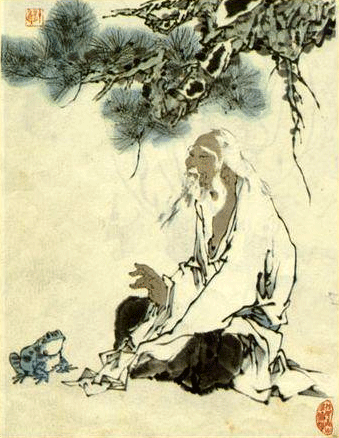
The Unyielding Bow: Embracing the Tension of Commitment
Chuang Tzu's observation that "there are men whose talents are like the bow that is hard to draw, but, having been drawn, never returns to its rest" invites us to reflect on the nature of human potential and the commitment required to realize it. This metaphor of the bow encapsulates the struggle and perseverance inherent in the pursuit of one's gifts. It speaks to the tension between effort and ease, urging us to consider how we engage with our own capabilities and the responsibilities that come with them.
In a world that often values immediate results and effortless success, Chuang Tzu's words remind us that true mastery and fulfillment demand a willingness to endure discomfort and challenge. The bow, once drawn, symbolizes a state of readiness and engagement that does not easily revert to passivity. This teaching resonates deeply in our contemporary lives, where the cultivation of talents often requires sustained effort and a commitment to growth, even when the path is fraught with difficulties.
The image / the metaphor
The imagery of the bow in Chuang Tzu's quote evokes a visceral sense of tension and potential. A bow that is hard to draw suggests an initial struggle, a resistance that must be overcome. The act of drawing the bow requires strength and intention, and once it is drawn, it is poised to release its energy. This dynamic encapsulates the duality of human experience: the challenge of engaging with our talents and the exhilarating release that follows when we commit ourselves fully to our pursuits.
Diving deeper into the metaphor, we can see that the bow represents not only our talents but also the discipline and perseverance required to harness them. The phrase "never returns to its rest" implies a continuous state of engagement, a reminder that once we have tapped into our potential, we are called to maintain that momentum. This ongoing commitment can be both exhilarating and daunting, as it demands that we remain vigilant and responsive to the opportunities and challenges that arise in our lives.
In the speaker's tradition
Chuang Tzu's insights are deeply rooted in the Taoist tradition, which emphasizes the importance of aligning with the natural flow of life. Concepts such as wu wei, or effortless action, and the idea of embracing spontaneity resonate with the metaphor of the bow. In Taoism, there is an understanding that true mastery arises not from forceful striving but from a harmonious engagement with one's inherent nature and the world around us. This balance of effort and surrender is central to realizing one's dharma, or life purpose.
In the text of the Zhuangzi, we find numerous stories that illustrate the paradox of effort and ease. For instance, the tale of the skilled butcher, who effortlessly carves meat by following the natural lines of the animal, exemplifies the principle of wu wei. This narrative echoes Chuang Tzu's assertion that when we align our actions with our true nature, we can achieve remarkable results without unnecessary struggle. The bow, then, becomes a symbol of both the effort required to draw it and the grace that emerges when we learn to navigate our talents with wisdom.
Living the teaching
Consider a modern scenario where this teaching resonates: an artist grappling with self-doubt while attempting to create a new piece. The initial act of drawing upon their talent feels laborious, as they wrestle with perfectionism and fear of failure. Yet, as they persist and allow themselves to be vulnerable, the creative process begins to flow. The artist discovers that the act of creation, much like drawing a bow, requires both commitment and the courage to embrace the uncertainty that accompanies it. In this way, the struggle becomes a vital part of their artistic journey.
This teaching can also be applied to relationships, particularly during challenging moments. Imagine a couple facing a conflict that feels insurmountable. The initial effort to communicate and understand each other may feel like drawing a tight bow, fraught with tension and discomfort. However, as they commit to the process of honest dialogue and vulnerability, they may find that their connection deepens, and the resolution becomes a source of strength. Here, the bow symbolizes the commitment to navigate the complexities of love, reminding us that true intimacy often requires us to draw upon our inner resources and remain engaged, even when it feels difficult.
A reflection
As we contemplate Chuang Tzu's profound words, we are invited to consider: In what areas of my life am I resisting the effort required to draw upon my talents? This question encourages us to reflect on our own commitments and the ways in which we might be holding back from fully engaging with our potential. By embracing the tension of the drawn bow, we can cultivate a deeper understanding of ourselves and the transformative power of perseverance.



Join the BrightStar Community
Stay connected with daily inspiration, event announcements, and community wisdom