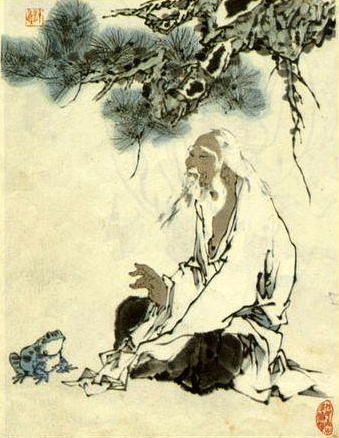
The Wisdom of Knowing When to Stop
Chuang Tzu's assertion, "He who knows when to stop does not find himself in trouble," invites us to reflect on the profound wisdom of discernment and moderation. In a world often driven by ambition and relentless pursuit, this quote serves as a gentle reminder of the importance of recognizing our limits. The ability to pause, to step back, and to know when to cease our efforts can be the difference between harmony and chaos in our lives. This wisdom is not merely practical; it is a spiritual insight that can guide us toward a more balanced existence.
Delving deeper, we find that this teaching resonates with the essence of Taoist philosophy, which emphasizes the natural flow of life and the importance of aligning with it. Stopping is not a sign of weakness; rather, it is an act of strength and awareness. It requires a deep understanding of oneself and the surrounding environment. In recognizing when to halt our actions, we cultivate a space for reflection and renewal, allowing us to navigate life with greater clarity and purpose.
The image / the metaphor
The imagery in Chuang Tzu's quote evokes a sense of balance and poise. The phrase "knows when to stop" suggests a conscious awareness, a mindful engagement with one's actions and their consequences. It implies a dance with life, where one must be attuned to the rhythm of existence. The verb "knows" carries a weight of wisdom, indicating that this understanding is not merely intellectual but deeply felt and embodied. The act of stopping becomes a powerful metaphor for self-preservation and insight, a way to avoid the pitfalls that often accompany unchecked ambition.
In the speaker's tradition
Chuang Tzu's wisdom is deeply rooted in the Taoist tradition, which emphasizes the importance of living in harmony with the Tao, or the Way. Central to this philosophy is the concept of discernment, which involves understanding the appropriate timing and context for our actions. This discernment is akin to the Buddhist notion of prajna, or wisdom, which encourages insight into the nature of reality and the impermanence of all things. By knowing when to stop, we align ourselves with the natural rhythms of existence, cultivating a sense of peace and balance.
In the text of the Zhuangzi, we find numerous anecdotes that illustrate the importance of knowing when to cease striving. One such story involves a skilled archer who, after hitting his target, recognizes the futility of further attempts. This narrative encapsulates the essence of Chuang Tzu's teaching, highlighting that true mastery lies not in relentless pursuit but in the wisdom of knowing when to let go. This understanding is echoed in various spiritual traditions, where the act of surrendering to the flow of life is celebrated as a path to enlightenment.
Living the teaching
Consider a modern scenario where this teaching resonates: the workplace. In an environment that often glorifies overwork and constant striving, the ability to recognize when to step back can be transformative. Imagine a project manager who, overwhelmed by deadlines and expectations, learns to pause and reassess priorities. By doing so, they not only alleviate their own stress but also create space for their team to innovate and collaborate more effectively. This act of stopping becomes a catalyst for creativity and productivity, illustrating the practical application of Chuang Tzu's wisdom.
In the realm of relationships, the teaching of knowing when to stop can also play a crucial role. Picture a couple navigating a difficult conversation. One partner, sensing the rising tension, chooses to pause and reflect rather than push forward with their point. This moment of stopping allows for a deeper understanding to emerge, fostering empathy and connection. By embracing the wisdom of discernment in our interactions, we cultivate healthier relationships and create an environment where love and understanding can flourish.
A reflection
As we contemplate Chuang Tzu's profound insight, we are invited to consider our own lives: Where might we benefit from the wisdom of knowing when to stop? In what areas do we find ourselves pushing too hard, perhaps at the expense of our well-being or relationships? This contemplative question encourages us to engage with our inner landscape, fostering a deeper awareness of our actions and their impact on our lives. By embracing this wisdom, we can cultivate a more harmonious existence, aligned with the natural flow of our journey.



Join the BrightStar Community
Stay connected with daily inspiration, event announcements, and community wisdom