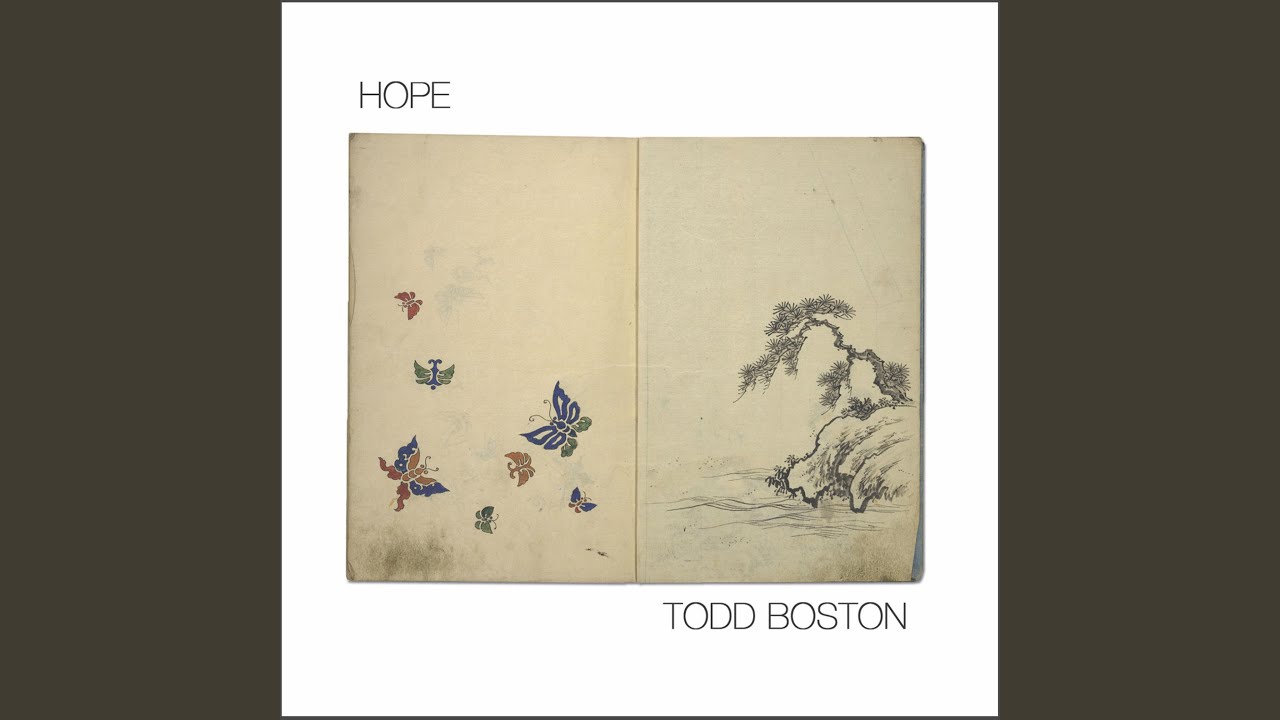
Todd Boston's composition "Wings" uses the metaphor of flight and transcendence as a doorway into understanding spiritual liberation and freedom of consciousness. Released as part of his album Hope, the piece invites listeners to explore what it means to rise beyond ordinary limitations of mind and body, to cultivate the inner conditions that allow consciousness itself to expand and soar.
What Does Wings Explore as a Spiritual Metaphor?
The image of wings carries deep symbolic weight across spiritual traditions and contemplative practice. Wings represent the capacity to move beyond fixed ground, to transcend earthly gravity, and to access vantage points from which the ordinary world looks transformed. In Todd Boston's musical work, this metaphor becomes not merely poetic but practical—an invitation to examine what would be required, both inwardly and outwardly, for consciousness to achieve genuine freedom.
Spiritual teachers have long used flight as shorthand for enlightenment, liberation, and the dissolution of ego-boundaries. The Buddha spoke of leaving behind the "earthly realm." Rumi wrote of the soul as a bird that could fly only once it shed its cage. In this tradition, Boston's composition offers a contemporary exploration: what are the constraints we carry, and what would liberation actually feel like?
How Does Sound Work as a Container for Transcendence?
Music operates at frequencies and through rhythmic patterns that bypass the rational mind and speak directly to the nervous system. Todd Boston's work, released through Gita Records, draws on this principle. The title Hope for the album suggests that this music is not escapist but grounded in a genuine aspiration toward growth and transformation.
In contemplative music, sound waves can either agitate the mind or settle it. A composition called "Wings" likely works with the listener's breath, heartbeat, and subtle energetic responses—inviting the body and consciousness to relax their grip on limitation. The music becomes a mirror: as we listen, we encounter our own resistances, but we also glimpse what might lie beyond them.
This approach is shared by many contemporary spiritual musicians and kirtan artists who understand that sound itself is a form of teaching. The listener does not simply hear information; they experience a shift in their internal state through resonance and repetition.
What Spiritual Traditions Inform the Concept of Wings?
Several lineages have emphasized the metaphor of flight and unfoldment:
- Hindu and yogic traditions speak of kundalini as a coiled serpent that "rises" through the body, and of the spiritual heart as a space from which consciousness naturally soars.
- Buddhist teachings point to non-attachment as the condition that allows the mind to be "unbound"—free from the weight of grasping and aversion.
- Sufi poetry extensively uses the image of the bird and the cage to describe ego-dissolution and union with the divine.
- Christian mysticism describes the soul's ascent and the dove as a symbol of grace and the Holy Spirit moving freely.
Boston's work, released on a label affiliated with contemplative and devotional music (Gita Records), likely draws on these cross-cultural understandings while remaining accessible to listeners who may not hold religious belief. The metaphor works because it speaks to a universal human intuition: that we are capable of more freedom than we habitually experience.
How Can Listeners Work With This Music in Practice?
A piece titled "Wings" in a devotional or contemplative context is typically designed to be used as part of a listening or meditative practice. The most direct way to work with such music is to create conditions that allow the listening to penetrate beyond the thinking mind:
- Find a quiet space, sit comfortably, and allow the music to play without distraction or judgment.
- Notice where in your body you feel constraint, heaviness, or resistance as you listen.
- Allow your breath to synchronize with the natural rhythms of the music.
- Ask yourself: What would it feel like to release this particular constraint? What would freedom feel like in my life right now?
- Rather than chasing a particular experience, remain open to whatever arises—lightness, grief, sudden clarity, peace, or simply the sensation of your nervous system settling.
The metaphor of wings is not meant to encourage spiritual bypassing or denial of real limitations. Rather, it invites discrimination: which constraints are real, necessary, and protective? And which are simply habitual patterns we carry because we have never questioned them?
What Role Does Hope Play in Spiritual Practice?
The album title Hope is significant. In spiritual contexts, hope is not passive wishfulness or denial of difficulty. Hope, as understood in contemplative traditions, is a deliberate orientation toward possibility. It is the recognition that transformation is available, that effort matters, and that consciousness itself is not fixed.
When we listen to music explicitly framed within an album called Hope, we are being invited into a participatory act. We are not passive consumers but co-creators of the experience. Our attention, our willingness to feel, our openness to change—these become the "wings" that allow the work to touch us.
In this sense, "Wings" is not just a song about transcendence; it is a practice that catalyzes transcendence through the marriage of intention and attention. The listener brings the hope; the music holds the space for that hope to unfold.
Where to Go From Here
To deepen your encounter with this work, consider exploring other compositions by Todd Boston and artists working in similar spaces—contemporary spiritual musicians who combine traditional metaphors with modern sensibilities. The Gita Records label itself curates music specifically designed for contemplative practice; browsing its catalog can reveal related works.
You might also investigate the broader lineage of sacred music—from kirtan to Gregorian chant to Sufi qawwali—to understand how different traditions have used sound to invoke transcendence. Finally, consider how the metaphor of wings operates in your own life: What are you being invited to release? What would it feel like to claim greater freedom in body, mind, and spirit?