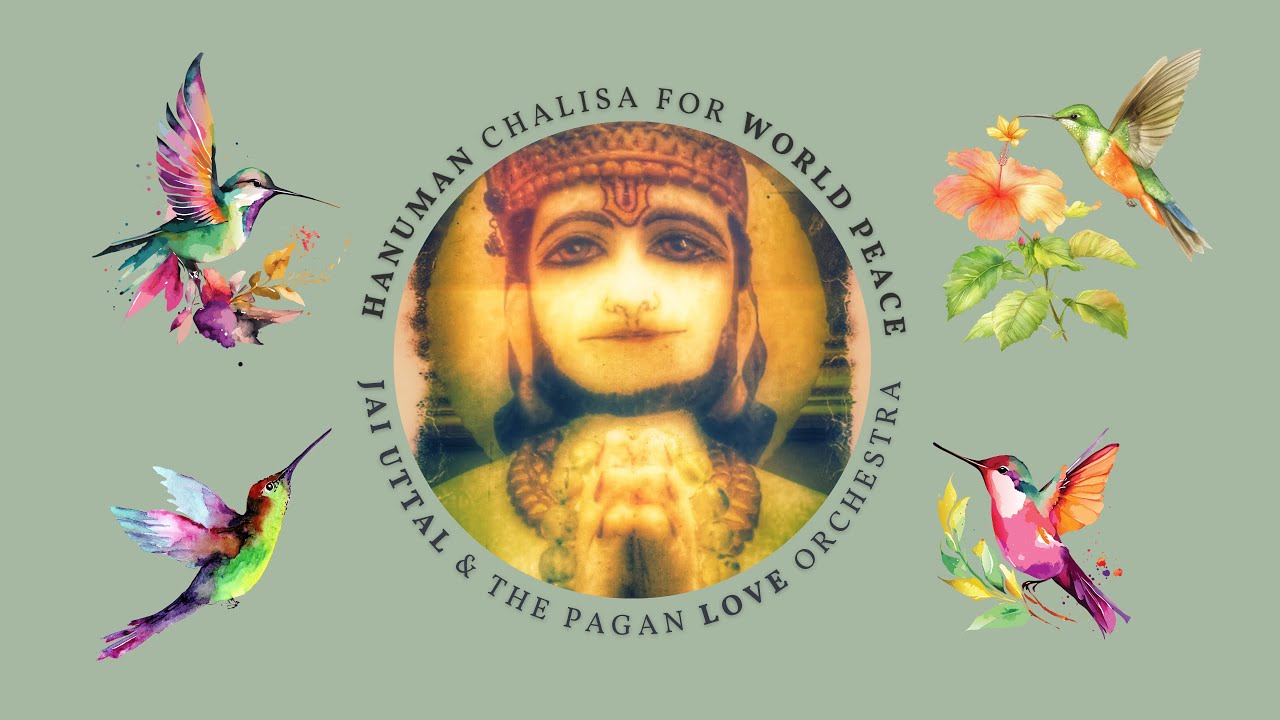
This live kirtan performance captures Jai Uttal leading a community chanting session of the Hare Krishna Maha Mantra at Yoga Pela Paz in São Paulo, Brazil, on August 15th, 2010. The mantra—"Hare Krishna, Hare Krishna, Krishna Krishna, Hare Hare, Hare Rama, Hare Rama, Rama Rama, Hare Hare"—forms the core of bhakti yoga practice and kirtan tradition. Through rhythmic repetition, call-and-response (antiphonal) singing, and community participation, kirtan creates a meditative state that practitioners use to cultivate devotion, reduce mental agitation, and access deeper states of consciousness. This recording documents how kirtan functions as both a spiritual discipline and a communal healing practice.
What Is the Maha Mantra and Why Does It Matter?
The Hare Krishna Maha Mantra is one of the most widely chanted spiritual formulas in Hindu and yogic traditions. It consists of sixteen names arranged in a specific sequence: "Hare Krishna, Hare Krishna, Krishna Krishna, Hare Hare, Hare Rama, Hare Rama, Rama Rama, Hare Hare." According to bhakti yoga philosophy, each word carries energetic and devotional significance. "Krishna" refers to the divine, often understood as representing the all-attractive nature of the absolute; "Rama" invokes divine strength and integrity; "Hare" is an address to the divine feminine energy that awakens and energizes the soul.
The mantra is not merely a linguistic phrase but a sonic technology designed to shift consciousness. In the bhakti tradition, repetition of these divine names (nama japa) is considered one of the most accessible paths to spiritual awakening in the modern age. Unlike meditation practices that require elaborate technique or intellectual understanding, mantra chanting meets practitioners where they are—through sound, rhythm, and communal engagement.
How Does Kirtan Create a Meditative State?
Kirtan differs from silent mantra practice (japa) in its use of call-and-response singing and community participation. In Jai Uttal's performance at Yoga Pela Paz, the leader (in this case, Uttal) initiates the melody and rhythmic pattern, while participants respond by echoing the mantra. This antiphonal structure serves multiple purposes: it anchors the mind to a single focus point (the mantra), synchronizes participants' breathing and heartbeats, and creates a field of collective intention.
The repetitive nature of chanting engages the reticular activating system—the brain's attention filter—in a way that quiets the analytical mind. Rather than fighting thoughts or trying to "clear the mind," kirtan practitioners find that the mantric syllables naturally displace mental noise. The rhythmic patterns, often accompanied by percussion instruments like the mridangam or harmonium, entrain the nervous system toward a state of coherence. This is why many practitioners report feeling deeply relaxed and mentally clear after kirtan, despite the energetic singing.
What Role Does Breath and Rhythm Play in Mantra Chanting?
In the Maha Mantra, the syllable structure naturally guides breath. Chanting "Hare Krishna, Hare Krishna, Krishna Krishna, Hare Hare" creates a breathing rhythm that is both grounding and enlivening. Each phrase has a natural pause, allowing the practitioner to inhale before the next cycle. This rhythmic breathing—often called ujjayi or oceanic breathing in yoga terminology—itself has a calming effect on the nervous system by activating the parasympathetic branch.
Additionally, the melodic contours and tonal variations in kirtan (as heard in Uttal's performance) engage different parts of the brain than spoken speech alone. The musical qualities activate the right hemisphere, which processes emotional tone, spatial relationships, and unified experience—contrasting with the left hemisphere's focus on logical analysis. This bilateral engagement creates a state of integrated awareness.
What Does Bhakti Yoga Mean in the Context of Kirtan?
Kirtan is a primary practice of bhakti yoga, the yoga of devotion. Bhakti yoga rests on the premise that love and devotional surrender are valid paths to enlightenment—not as emotion in the psychological sense, but as a direct alignment of the individual consciousness with the divine consciousness. Chanting the names of the divine in a state of genuine longing or gratitude is understood to invoke a responsive grace.
In this framework, kirtan is not performance or entertainment, though it may appear festive and joyful. Rather, it is a technology for shifting the practitioner's identity from the ego (the individual sense of separation) toward the universal Self. Repeated invocation of the divine names is believed to gradually dissolve the barriers between subject and object, observer and observed. Over time, the distinction between "I am chanting" dissolves into "the divine is being invoked through me."
How Does Community Participation Amplify the Practice?
At Yoga Pela Paz, the presence of multiple participants singing together creates a field effect. Neuroscience research has shown that group chanting synchronizes heart rate variability and increases coherence in brain wave patterns across participants. The shared rhythmic intention produces a collective resonance that individual practice alone may not generate.
For many practitioners, kirtan also serves a social function—it breaks down isolation and creates a sense of belonging. In modern spiritual life, many people feel disconnected from community and shared meaning-making. Kirtan provides a structured container in which vulnerability and openness are invited and supported. The anonymity of the group (individual voices are absorbed into the whole) reduces social self-consciousness, allowing people to sing more authentically.
What Are the Reported Benefits of Regular Kirtan Practice?
Practitioners report a wide range of benefits: reduced anxiety and depression, improved sleep quality, increased emotional resilience, and a sense of spiritual connection. At the physiological level, regular chanting has been shown to lower blood pressure, reduce cortisol (stress hormone), and increase parasympathetic tone. Some research suggests that the vibrations produced by chanting may stimulate the vagus nerve, which governs the relaxation response.
At the psychological level, kirtan practice can reduce rumination and obsessive thought patterns by providing a stable alternative focal point for attention. The mantra acts as a mental refuge—whenever the mind becomes chaotic or disturbed, the practitioner can return to the familiar syllables. Over time, this trains the mind toward steadiness (ekagrata in Sanskrit).
At the spiritual level, practitioners describe a sense of transformation in their perception of self and world. Many report that regular kirtan gradually shifts values away from material acquisition and ego-based achievement toward compassion, service, and inner peace. This is attributed not to belief systems but to the direct vibrational and energetic effects of the practice itself.
Who Was Jai Uttal and Why Is His Kirtan Style Significant?
Jai Uttal is a kirtan artist and spiritual musician who has been central to bringing kirtan from its traditional Hindu and Indian contexts into Western consciousness since the 1980s. His approach blends traditional mantra with world music influences—including jazz, reggae, and Latin rhythms—making the practice accessible and relevant to contemporary seekers. Rather than presenting kirtan as a museum artifact, Uttal demonstrates that the ancient practice is alive and evolving.
His performances, like the one documented at Yoga Pela Paz, are characterized by deep devotional sincerity alongside musical sophistication. He does not treat kirtan as entertainment to be consumed but as an invitation into a participatory sacred space. His willingness to sing in non-traditional settings—yoga studios, secular venues, international locations—has helped normalize kirtan as a legitimate spiritual practice outside of Hindu temples.
How Can Someone Begin a Kirtan Practice?
Beginning kirtan practice requires no special preparation or belief system. The Maha Mantra is freely available—it can be learned from recordings, from live teachers, or from kirtan communities. Many cities now have regular kirtan gatherings. For those unable to attend in person, recorded kirtan (like this performance by Jai Uttal) can serve as an entry point.
The simplest approach is to attend a kirtan event and follow along, letting the melody and rhythm carry you rather than overthinking the meaning. As familiarity develops, the mantra begins to work on subtler levels of consciousness. Some practitioners eventually adopt personal japa practice—chanting the mantra alone with a mala (prayer beads, typically 108 beads) for a fixed duration each morning or evening.
The key is consistency. A few minutes of daily mantra chanting produces measurable shifts in nervous system tone and mental clarity within weeks. Over months and years, the effects deepen into sustained changes in perception and spiritual orientation.
Where to Go From Here
If this introduction to kirtan resonates, consider exploring: (1) live kirtan communities in your area or online; (2) recordings of different kirtan artists to find musical and devotional styles that appeal to you; (3) basic Sanskrit pronunciation guides so you can chant with correct tonal quality; (4) texts on bhakti yoga philosophy (like the Bhagavad Gita or Nectar of Devotion) to deepen intellectual understanding; (5) personal japa practice using the Maha Mantra or other sacred mantras, beginning with 5–10 minutes daily and expanding from there. The practice itself is the primary teacher—direct experience of how the mantra affects your consciousness will reveal far more than any external instruction.