EveryEvent Istanbul

Browse All Events

Find every event in Istanbul

events

Concerts & Live Music
Festivals
Sports & Recreation
Food & Drink
Arts & Culture
Community
Family & Kids
Nightlife
Comedy
Theater
Popular Destinations
BaliSedonaLos AngelesCosta RicaNew YorkSan FranciscoAustinMiamiJoshua TreeTulum
View All CategoriesView All Destinations

Explore All Features

Powerful tools to grow your events

Platform Features

Smart Dynamic Pricing
Ticket Categories
Assigned Seating
Abandoned Cart Recovery
Visitor Recovery
Donations & Sliding Scale
Affiliate Engine
Ticket Scanner
Coupon Codes
Custom Questions
Ticket Sharing
Upsells & Add-ons
Analytics & Reporting
Email Sequences
Waitlist / Notify / Remind
Explore
Discovery HubArtists & PerformersVenuesKnowledge Base
View All FeaturesAbout Us
PricingBlog
Language
Saved events
Browse All Events

events

Concerts & Live MusicFestivalsSports & RecreationFood & DrinkArts & CultureCommunityFamily & KidsNightlife

Popular Destinations

BaliSedonaLos AngelesCosta RicaNew YorkSan Francisco

Explore

Discovery HubArtists & PerformersVenuesKnowledge Base

Platform Features

Smart Dynamic PricingTicket CategoriesAssigned SeatingAbandoned Cart RecoveryVisitor RecoveryDonations & Sliding ScaleAffiliate EngineTicket ScannerCoupon CodesCustom QuestionsTicket SharingUpsells & Add-onsAnalytics & ReportingEmail SequencesWaitlist / Notify / Remind
View All FeaturesAbout Us
PricingBlog
Log inSign UpEvent Organizers
  • Browse All Events
  • Concerts & Live Music
  • Festivals
  • Sports & Recreation
  • Food & Drink
  • Arts & Culture
  • Community
  • Family & Kids
  • Nightlife
  • All Categories →
  • All Destinations →
  • For Promoters
  • For Artists
  • For Venues
  • For Festivals
  • For Event Spaces
  • For Nonprofits
  • For Bloggers
  • For Speakers
  • Brand Ambassador
  • Case Studies
  • 350K+ Buyer Network
  • Abandoned Cart Recovery
  • Smart Dynamic Pricing
  • Ticket Categories
  • Recurring Events
  • Assigned Seating
  • Affiliate Engine
  • Waitlist / Notify
  • Ticket Scanner
  • Embed Widget
  • Event Syndication
  • Message Center
  • Integrations
  • Reports
  • All Features →
  • About
  • The Ecosystem
  • Blog
  • Glossary
  • Inspiration
  • Help Center
  • Contact
  • API Docs
  • Brand Assets
  • Careers
  • Press
  • Terms of Service
  • Privacy Policy

Events

  • Browse All Events
  • Concerts & Live Music
  • Festivals
  • Sports & Recreation
  • Food & Drink
  • Arts & Culture
  • Community
  • Family & Kids
  • Nightlife
  • All Categories →

Getaways

  • All Destinations →

For Organizers

  • For Promoters
  • For Artists
  • For Venues
  • For Festivals
  • For Event Spaces
  • For Nonprofits
  • For Bloggers
  • For Speakers
  • Brand Ambassador
  • Case Studies

Features

  • 350K+ Buyer Network
  • Abandoned Cart Recovery
  • Smart Dynamic Pricing
  • Ticket Categories
  • Recurring Events
  • Assigned Seating
  • Affiliate Engine
  • Waitlist / Notify
  • Ticket Scanner
  • Embed Widget
  • Event Syndication
  • Message Center
  • Integrations
  • Reports
  • All Features →

Company

  • About
  • The Ecosystem
  • Blog
  • Glossary
  • Inspiration
  • Help Center
  • Contact
  • API Docs
  • Brand Assets
  • Careers
  • Press
  • Terms of Service
  • Privacy Policy
EveryEvent
© 2026 EveryEvent Istanbul. All rights reserved.
Inspire

How the Bauls of Bengal BrokeMy Sky: A Musician's Search

Jai Uttal
Jai Uttal
Aug 26, 2026
8 min read
Watch · 7

A single album—Street Music of India: The Bauls of Bengal—arrived in Jai Uttal's teenage years and cracked something open in him that classical training had sealed shut. It wasn't the technical precision that moved him. The singing on that recording was raw, untrained, almost rough. But it carried a passion that felt like it was "breaking through the sky and reaching for the heavens," as he recalls it. From that moment, he knew: someday he would find these singers. Decades later, a dirt path in West Bengal would make that dream real—and transform not just his voice, but his entire understanding of what music could be.

Read · 7 sections

The Outcasts Who Held a Culture's Soul

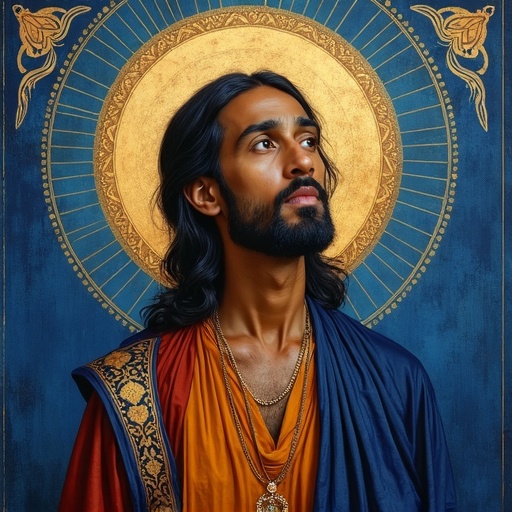
The Bauls had always existed at the margins. Bengal's mainstream Hindu and Islamic establishments treated them as irrelevant, if not outright heretical. They rejected formal religious structure entirely—no priests, no images, no codified doctrine. What they wanted instead was direct communion with the divine, which they called "the man in the heart": Krishna, Allah, or by no name at all. They wandered the villages with long hair and patchwork clothing, singing their ecstatic devotional songs to anyone who would listen.

It took Rabindranath Tagore, the renowned Bengali mystic and poet, to reframe them. When others dismissed the Bauls as spiritual outcasts, Tagore insisted they were actually "the jewel of Bengali culture." His defense mattered. Tagore's own transmission of spiritual music—Ali Akbar Khan, the sitar maestro Uttal had studied with, sat on Tagore's lap as a child—connected him intimately to that lineage. The Bauls, once scorned, gradually became recognized as living repositories of something essential in the Bengali soul.

Following a Sound Down a Dirt Path

Uttal and his friend Gangadhar arrived in Shantiniketan, the university town Tagore had founded, with a simple aim: find the Bauls. They settled into the rhythms of a small Indian village—dirt paths, chai stands, the everyday randomness of spiritual seeking. On one afternoon, sitting with tea and biscuits at a little roadside stall, they heard something approaching: singing, drums, and the bright jingle of ankle bells.

What appeared was a single old man playing multiple instruments at once. He had a tabla-like drum strapped to his waist, playing it with one hand. In the other, a one-string ektara. Around his ankles, bells that rang with each step. By any formal measure, the music was a wreck—out of tune, out of rhythm, the instruments barely coordinated. And yet, something about his presence stopped them cold. "He was so beautiful," Uttal recalls. "He was contained in this kind of...a vessel of light."

They invited him for chai. Language was no barrier to hospitality; they shared a meal in silence, then watched him continue down the path. Looking at each other, Gangadhar and Uttal made their decision in an instant: follow him. They trailed behind for what felt like a long distance, half-worried they might get lost in the Bengal backwoods. Then the path opened into a clearing.

The Mother Lode: A Gathering of Families

A tent stood in the clearing, a simple stage in front of it. There were far more performers than audience members—something Uttal would later embrace in his own musical philosophy. But what he saw on that stage broke his understanding of what a "concert" was supposed to be. It wasn't a lineup of professionals. It was families: young men and women, older men and women, grandmothers, nursing mothers. A whole village, essentially, making music together.

The structure was intimate and participatory. One person at a time would stand and sing—sometimes with a dotara (a small stringed instrument), sometimes with a drum, sometimes voice alone. The rest of the family on stage would support them, singing choruses, creating a web of sound around the soloist. Each song emerged from and returned to the collective. "It was so cool," Uttal says. "We felt like, okay, we have just hit the mother lode, right?"

Then two figures caught his attention: two men standing to the side of the stage. Without fully understanding why, Uttal somehow knew these were the same two faces from the cover of Bob Dylan's John Wesley Harding—the album that had sparked Dylan's own turn toward folk simplicity and spiritual seeking. They were Purna Das Baul and Lakshman Das Baul, two of the most recognized Baul singers in the world.

An Unexpected Proposal on a Bengal Path

Uttal and Gangadhar approached them, armed with nothing but Namaskar and genuine greeting. There was no shared language—no English on one side, no Bengali on the other. Lakshman Das Baul, a striking man with long hair and a turban, looked at the young American and asked, with perfect comic timing, "Do you have any LSD?" The question became legend between them, a kind of spiritual joke at the intersection of 1960s counterculture and ancient Bengal mysticism.

But it was a younger Baul singer named Bijoy Nath Das Baul who became their teacher. Uttal, Gangadhar, and their girlfriends rented a house together by a dry riverbed in the desert outside town—a space that had been built as an art studio by a local artist named Kiran Sinha. Bijoy Nath Das would arrive three or four times a week to teach them.

What unfolded was a masterclass in music that had nothing to do with words. Bijoy Nath Das taught them the dotara, a miniature sarod. He taught them the drum patterns, how to strike rhythm on a wooden table. He taught them the songs themselves. But mostly, he taught them how to sing from the heart—not from technique, not from ego, but from a place so raw and vulnerable that perfection became irrelevant.

A Different Kind of Mastery

The beauty of this teaching was its radical simplicity. A Baul didn't aspire to be a virtuoso. The goal wasn't flawless execution or the polish of years of raga study. The goal was presence, emotion, and an absolute commitment to the truth of the moment. In that small house by the riverbed, Uttal experienced something that no amount of classical training had opened to him: the liberation of singing badly—or rather, singing truthfully, which meant singing outside the bounds of conventional technique altogether.

Kiran Sinha, the artist who owned the house, became a bridge between the American seekers and their Bengali teachers. He translated not just words but the deeper intention behind the Baul approach. Through translation, Uttal began to understand that this wasn't a different musical language—it was a completely different philosophy of what music was for.

The Bauls had always known this. They weren't interested in earning prestige or mastering a system. They were interested in the transformation that happens when you stop protecting yourself and start singing directly from the longing in your heart. That vulnerability, that rawness—it was what Uttal had heard on that first album years ago, the sound that felt like it was breaking through the sky. Now he was learning where it came from.

The Transformation

Uttal describes the impact with unusual clarity: "The songs and the teachings of these incredible Bauls of Bengal was completely transformed my musical creativity." It wasn't just that he learned new songs or new techniques. His entire understanding of what a singer was, what singing was for, shifted fundamentally. The classical training that had taught him to strive for perfection, to eliminate imperfection, to become an instrument of flawless technique—all of that had to be unlearned. What replaced it was something far more dangerous and alive: the commitment to express exactly what is happening in your heart, right now, in this moment, with no buffer of technique between the feeling and the sound.

This would shape everything that came after. The Pagan Love Orchestra, his lifetime of kirtan, his entire musical vision—all of it grew from those weeks in West Bengal, sitting with people who had chosen the outcast's path, who had rejected the sanctioned and pursued the sacred anyway. They taught him that the sky could be broken through not by perfecting yourself but by surrendering yourself entirely.

Where to go from here

If you're interested in exploring Baul music itself, seek out recordings by Purna Das Baul and other traditional singers. The rawness will be clear—and if you listen the way Uttal did, you might hear what he heard: passion that transcends technique. Consider also how this story applies to your own creative life. What are you perfecting at the expense of truthfulness? Where are you playing it safe instead of breaking through the sky? The Bauls lived in service to a single question: how can I sing my longing? That same question is available to any of us, in any art form, any craft. The answer begins not with training but with vulnerability.

Transcript

[0:00] Greetings, and welcome to Discovering

[0:03] Jai Utah.

[0:04] >> [music]

[0:04] >> That's me. This is a nine-part journey

[0:07] through the stories, music, [music]

[0:09] teachers, the challenges, and the

[0:11] moments of grace that have shaped my

[0:12] life and continue to guide my path of

[0:15] devotion. I hope you enjoy.

[0:20] I mentioned a little earlier in a

[0:22] previous episode

[0:24] how one of the albums that I had

[0:25] purchased

[0:27] you know, profoundly, profoundly moved

[0:29] me. Album was called Street Music of

[0:31] India, The Bauls of Bengal.

[0:34] And

[0:36] you know, it it was kind of the first

[0:38] time I heard this this singing

[0:42] well, you know, it was an Indian

[0:43] singing, but it it had this passion in

[0:46] it. It was It was not

[0:48] um

[0:49] elegant or trained, but it was very

[0:52] rustic, but it had this passion [snorts]

[0:54] that like felt like it was breaking

[0:56] through the sky and reaching for the

[0:59] heavens. And And you know, I felt it.

[1:02] I was not really a singer. I I I sang a

[1:06] little bit, you know, but but I I wasn't

[1:09] really a singer, but I wanted to be able

[1:11] to break that to that sky like that.

[1:14] Anyway,

[1:16] uh

[1:17] I decided

[1:19] there and then that someday, somehow, I

[1:22] wanted to meet these guys. I also

[1:24] remember that when Bob Dylan put out his

[1:27] album John Wesley Harding when he was

[1:30] kind of, you can say, on a tree in

[1:32] Woodstock, on the cover of this album

[1:35] were these two

[1:37] Bengali Bauls, you know, they had the

[1:38] turbans, they had the patchwork quilts,

[1:41] and

[1:41] you know, who Who? How? Why? Right?

[1:45] So, anyway,

[1:46] I went to India, and I was there with my

[1:49] friend, and we decided we got to find

[1:51] the Bauls. So, so, we were actually in

[1:54] different parts of India. We said we're

[1:55] We're to meet in Calcutta.

[1:58] Which we did.

[1:59] Somehow, and then we took a train to

[2:02] West Bengal to this town called Bolpur.

[2:04] Bolpur,

[2:06] um

[2:06] you know, it's a it's a dirty, uh you

[2:09] know, messy Indian

[2:11] town,

[2:12] uh a train stop. But nearby it was a

[2:15] town called Shantiniketan. And

[2:17] Shantiniketan was was founded by

[2:19] Rabindra Rabindranath Tagore, who was um

[2:23] a renowned, worldwide renowned Indian

[2:26] mystic, poet, author, singer.

[2:30] One could say saint.

[2:32] Uh Ali Akbar Khan,

[2:34] who I talked a lot about in the previous

[2:36] episode,

[2:38] re- remembered when he was a baby being

[2:40] on sitting in Rabindranath Tagore's lap.

[2:44] So, that transmission from generation to

[2:47] generation. Anyway, um

[2:49] we had read that the Bauls lived around

[2:52] Shantiniketan. And the Bauls, you know,

[2:55] at first were treated as as outcasts.

[2:58] They they

[3:00] They were very mystical, but they didn't

[3:02] want anything to do with formalized

[3:04] Hindu religion or formalized Islamic

[3:07] religion.

[3:09] They They wanted no forms, they wanted

[3:11] no pictures, no images, and they

[3:13] worshipped God

[3:16] mostly calling him Krishna, but not

[3:18] always. Some called him Allah. And they

[3:21] worshipped him as the the man in the

[3:23] heart.

[3:25] Um

[3:25] the man who lived in the heart and soul.

[3:28] So, um also they had long hair, they

[3:30] wore patchwork clothing. But it was

[3:33] Tagore who said,

[3:35] "You're calling these people outcasts,

[3:36] but these This is the jewel of Bengali

[3:40] culture. You must

[3:42] uh

[3:42] listen to them more deeply. Look at them

[3:45] more deeply. They are to be honored."

[3:47] So,

[3:49] well, anyway, we were in this town town

[3:50] of Shantiniketan, and I had the

[3:52] intention of there was a university

[3:55] there founded by Tagore. I had the

[3:56] intention to study some more classical

[3:59] music at the at the university, but

[4:01] really what we wanted to do was find

[4:04] some bells. So, Gangadhar and I

[4:07] were walking around the paths. It was,

[4:09] you know, it was a small village, all

[4:12] dirt paths. And And

[4:14] we were walking around a path one day

[4:16] and there was a little chaiwala.

[4:17] Chaiwala means a chai seller. It's, you

[4:20] know, it's a little

[4:21] tent with a couple of benches and, you

[4:24] know, a

[4:25] a stove that was made out of clay.

[4:29] That's the way the chais chai stands

[4:30] used to be in India, and very like, oh,

[4:33] great. So, we sat down,

[4:35] we had a chai and a little biscuit,

[4:38] and and we're just kind of wondering

[4:39] what to do next, and we hear this sound

[4:42] from down the path coming from where we

[4:44] had come.

[4:46] And somebody's singing and a drum and a

[4:48] shaker. We thought it was probably a

[4:50] couple of people, but then

[4:51] we see that it's just one old man. He's

[4:54] got long, long hair. And he he is,

[4:59] you know, has one kind of looks like a

[5:00] tabla drum attached to his waist, which

[5:03] he's playing with his left hand. He has

[5:05] a one-string instrument, an ektara, that

[5:08] he's playing with his right hand. And

[5:09] he's got ankle bells around his ankles

[5:11] that he's walking and singing. Now,

[5:15] how do I say this with without

[5:18] denigrating someone? Well, I'll put it

[5:20] this way. The the sound was completely

[5:22] out of tune. The drum was completely out

[5:25] of rhythm. The ektara was, I don't know

[5:27] where it was, but he was beautiful. He

[5:30] was so beautiful. He was contained in

[5:32] this

[5:33] kind of like,

[5:36] I don't know, like a like a vessel of

[5:38] light. So, well,

[5:40] we asked him if we could buy him a chai.

[5:42] We couldn't really talk cuz I didn't

[5:43] know any Bengali and he did not know any

[5:46] English.

[5:47] But he sat down with us, we bought him a

[5:49] chai, we bought him a biscuit.

[5:51] And um

[5:53] then he graciously said thank you and

[5:55] went on his way. So, Gangadar and I

[5:57] looked at each other and said, "Let's

[5:58] follow this guy."

[6:00] So, so he was a you know, a little ways

[6:02] ahead, but we could hear him. So, we

[6:04] followed him on this path. We followed

[6:06] him for quite a while. And we're like

[6:08] kind of wondering, uh-oh, we're like, "I

[6:10] don't get lost in the in the backwoods

[6:13] of Bengal."

[6:15] But after a while, he came to this

[6:16] clearing and and there was a big tent

[6:19] and a stage and you know, in the under

[6:22] the tent were the bunch of seats, but it

[6:24] was very few people. It was It was not a

[6:26] big event. And but there was probably

[6:29] more people on stage than in the

[6:31] audience.

[6:33] Which jumping forward is kind of the way

[6:35] I like used to like to do it at Bhakti

[6:37] Fest. And I would say my whole musical

[6:41] vision for the Pagan Love Orchestra was,

[6:44] okay, people from different villages all

[6:46] around knew the same song, but they all

[6:48] know it a little differently and let's

[6:50] play it together.

[6:52] But let me backtrack again. So, we're in

[6:54] this this

[6:55] little space. And on stage, it's a bunch

[6:58] of it looked like a bunch of families.

[7:00] There's young men, older men, young

[7:02] women, older women,

[7:04] grannies and and nursing mothers and you

[7:08] know, it's just like a whole village on

[7:09] stage. And each song, somebody from the

[7:13] crowd would stand up. There was just one

[7:15] microphone and he or she would sing

[7:18] their song.

[7:19] Some playing a dotara, little string

[7:22] instrument, some playing a little drum,

[7:24] some just singing. And everybody all the

[7:27] families sitting on stage would sing

[7:29] support, you know,

[7:30] I don't know, they would sing the chorus

[7:31] with him or or whatnot.

[7:34] It was so cool.

[7:36] And we felt like, okay, we have just hit

[7:38] the mother lode, right? So, then the the

[7:41] whole concert

[7:43] and there's these these two fellows

[7:45] standing over to the side and we said,

[7:47] "These are the two guys that were on Bob

[7:50] Dylan's album cover."

[7:52] So, not knowing any English I mean, I'm

[7:55] sorry, any Bengali, we walked up to them

[7:58] and introduced ourselves. And one was

[8:01] Purna Das Baul, who later became

[8:03] probably the most famous Baul singer in

[8:05] the world. And the other was Lakshman

[8:08] Das Baul.

[8:09] And I said to Lakshman Das,

[8:12] "You know, hi, Namaskar, greetings. I

[8:15] saw you on that album with Bob Dylan."

[8:17] And he looked at me and he had this

[8:19] beautiful, beautiful face. It was very

[8:21] beautiful guy uh with a long hair and

[8:24] turban and he looked at me and he said,

[8:27] "Do you have any LSD?"

[8:30] >> [laughter]

[8:32] >> Of course, we didn't. But we made the

[8:35] acquaintance of a younger guy, a Baul

[8:37] named Bijoy Nath Das Baul, and we asked

[8:40] him to become our teacher.

[8:42] So, we had Gungadhar and I and

[8:44] our

[8:45] I should say our our girlfriends at the

[8:47] time got this house in the in the in the

[8:51] desert kind of

[8:52] uh

[8:53] uh you know, by a dry riverbed. That

[8:56] That was a crazy house that was created

[8:58] by this artist named Kiran Sinha Sinha

[9:02] um as a as an art studio dedicated to

[9:04] his daughter. So, we moved in and Bijoy

[9:06] Nath Das would come like three or four

[9:08] times a week and teach us songs.

[9:11] Again, we didn't speak any Bengali, he

[9:14] didn't speak any English, but he taught

[9:17] us music. He taught us how to play the

[9:19] dotara, it's like a kind of miniature

[9:21] sarod. He taught us how to play a drum

[9:23] beat on a wooden table and sing your

[9:25] heart out. And every song he taught me

[9:28] we would write down, you know, what it

[9:30] sounded like uh um

[9:33] uh phonetically, and then we go across

[9:35] the field to our our

[9:37] our um landlord, Kiran Sinha, this this

[9:41] beautiful, very renowned Indian artist,

[9:44] and his Austrian wife, named Ronnie.

[9:47] Kiran was an amazing man. He had become

[9:51] He was on the verge of becoming

[9:53] ultra famous, and and he his patron was

[9:55] Indira Gandhi, and he was at all these

[9:58] big art shows in in in Delhi, and he

[10:00] said, "I don't want this life. I don't

[10:03] want this world." And he moved

[10:05] back up to this village, to

[10:07] Shantiniketan, and became it became

[10:11] uh just a local artist, and and

[10:13] uh you know, he was making so many

[10:15] beautiful canvases. His wife, Ronnie,

[10:17] was kind of kooky, and and anyway, they

[10:21] took us into their home home and into

[10:23] their heart, and Kiran would translate

[10:25] all the songs for us.

[10:28] So,

[10:29] between Baidyanath Baul,

[10:31] Baidyanath Das Baul, teaching me music,

[10:35] and Kiran

[10:36] teaching me the meaning of the words,

[10:39] this this uh time in my life with the

[10:41] Bauls of Bengal was completely

[10:43] transformative. It it it it put a light,

[10:48] like a bright lightning bolt, into my

[10:51] whole musical consciousness and my whole

[10:54] musical creativity. I cherished

[10:57] that season with the Bauls

[11:00] with all my heart.

[11:04] >> [music]

Jai Uttal
AuthorJai Uttal

American kirtan singer, multi-instrumentalist, and pioneer of devotional sound in the West — one of the central figures, alongside Krishna Das, Snatam Kaur, and Deva Premal, in the…

View profileWebsite
Explore Topics
Baul-musicDevotional-singingSpiritual-musicBengalKirtan

Got Questions?

Frequently Asked Questions

The Bauls are wandering mystics from Bengal who rejected formal Hindu and Islamic religious structures in favor of direct spiritual practice. They worship what they call 'the man in the heart'—the divine presence within—and express their devotion through ecstatic, unpolished singing and music. Historically treated as outcasts, they were reframed by Rabindranath Tagore as 'the jewel of Bengali culture.'
Uttal first heard the Bauls' music on an album called 'Street Music of India: The Bauls of Bengal' as a teenager, which moved him profoundly despite its raw, untrained sound. He later traveled to West Bengal specifically to find them, eventually meeting them by chance on a dirt path near Shantiniketan and learning directly from Bijoy Nath Das Baul.
Baul singing prioritizes raw emotion and heart-centered expression over technical perfection. Unlike classical training, which emphasizes precise technique and flawless execution, Baul singers deliberately reject that model to sing directly from spiritual longing and vulnerability—even if it means the music is out of tune or out of rhythm.
Purna Das Baul and Lakshman Das Baul were two of the most famous Baul singers of their era. They gained international recognition partly through appearing on the cover of Bob Dylan's 1967 album 'John Wesley Harding,' which helped draw Western attention to Baul music and its spiritual traditions.
Through intensive study with Bijoy Nath Das—who taught him dotara, rhythm, and Baul songs—Uttal learned to prioritize emotional truth over technical precision. This fundamentally shifted his understanding of what music was for, moving from mastery of technique to direct expression of the heart's longing.
A dotara is a small stringed instrument similar in concept to a miniature sarod. It's traditionally played by Baul musicians and was one of the primary instruments Uttal learned during his time studying in West Bengal.
Tagore defended the Bauls when they were being dismissed as outcasts and heretics, calling them instead 'the jewel of Bengali culture.' This reframing helped shift mainstream Bengali perception of Baul traditions from marginal to culturally essential.

Continue Reading

More from Jai

View All
Hanuman Chalisa for World Peace: Ancient Chant for Modern Times
Featured

Hanuman Chalisa for World Peace: Ancient Chant for Modern Times

Jai Uttal leads a devotional rendering of the Hanuman Chalisa, a 40-verse Sanskrit hymn invoking strength, clarity, and peace through kirtan…

1 min read
Kirtan as Mourning: Grief and Presence in Devotional Practice
Featured

Kirtan as Mourning: Grief and Presence in Devotional Practice

A live kirtan honoring Shyam Das explores how chanting the Maha Mantra holds both longing and presence—the dual nature of bhakti when rememb…

1 min read
Yemaya Reimagined: Ocean Goddess Chant Unites Voices
Featured

Yemaya Reimagined: Ocean Goddess Chant Unites Voices

A new duet celebrating the Yoruba ocean goddess brings together two voices in a healing chant born from serendipitous meeting in Costa Rica.…

1 min read
Ocean Goddess Rising: Two Voices Reimagine Yemaya
Featured

Ocean Goddess Rising: Two Voices Reimagine Yemaya

Deva Premal and Ajeet unite in a devotional collaboration honoring Yemaya, the Yoruba ocean goddess, recorded in Costa Rica with arbutar acc…

1 min read

Keep exploring

Continue your journey

More wisdom and gatherings from across the BrightStar directory.

More Articles

Browse the full library of teachings, interviews, and guides.

Back to all articles →

Teachers & Artists

Explore the lineages, musicians, and guides of the conscious world.

Explore artists →

Find an Event

Kirtan, retreats, sound baths, breathwork, festivals — happening soon.

Browse events →