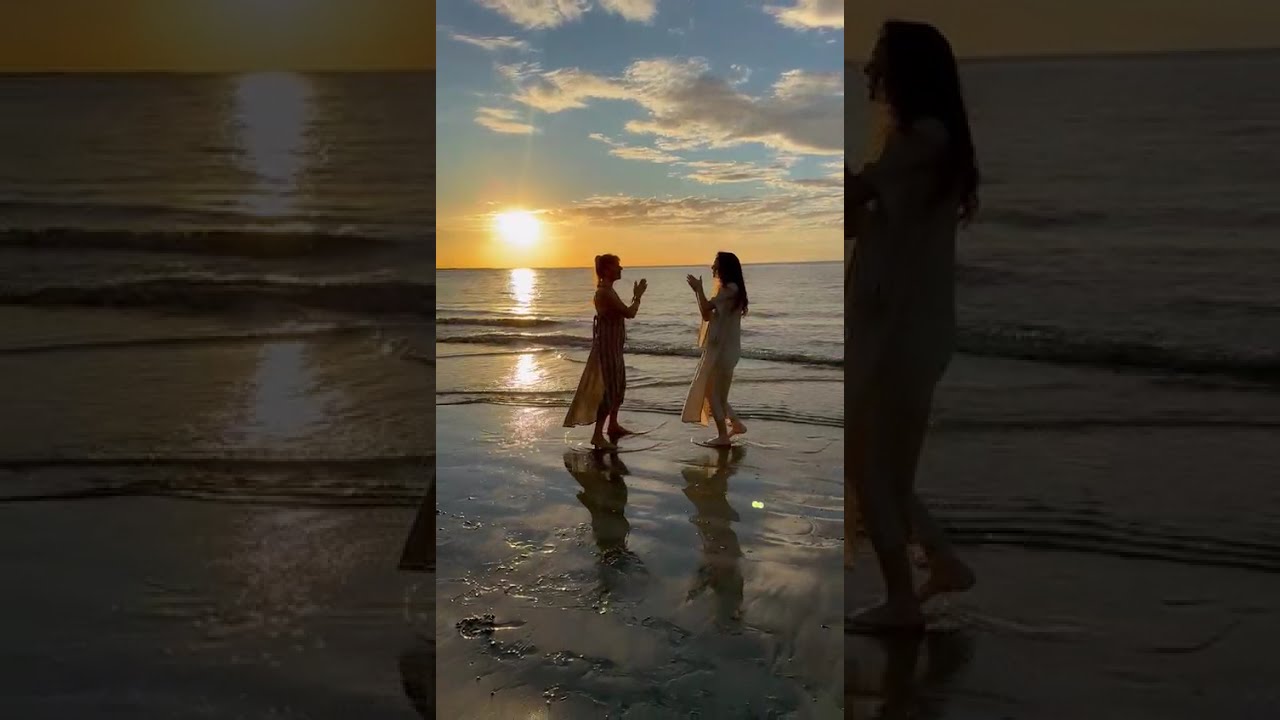
This live kirtan performance by Donna De Lory and Niki Haris centers on the mantra and intention of "Kinder"—a devotional exploration of how cultivating kindness operates as both a spiritual practice and a direct response to our interconnected world. Through call-and-response chanting rooted in the kirtan tradition, the artists guide listeners into the embodied experience of compassion as something that can be sung, felt, and transmitted between people.
What Is Kirtan and How Does It Work?
Kirtan is an ancient Hindu and yogic devotional practice of call-and-response chanting, often performed with instruments and typically lasting anywhere from 20 minutes to several hours. Unlike meditation that emphasizes silence, kirtan uses the voice as the primary vehicle for spiritual practice. The lead singer (or singers) offer a phrase, mantra, or invocation—often in Sanskrit or other devotional languages—and the audience or additional singers respond, creating a loop of repetition and deepening attention.
The power of kirtan lies partly in its rhythm, partly in the meanings embedded in the words being chanted, and partly in the collective energy that builds when many people chant together. Donna De Lory and Niki Haris are both established kirtan artists with decades of experience in devotional singing; their collaboration here on "Kinder" demonstrates how two strong voices can hold and deepen the intention a single mantra carries.
Why Focus a Kirtan on Kindness?
Kindness may sound simple—almost too gentle for spiritual work—yet it represents a foundational ethical orientation in many contemplative traditions. In yoga philosophy, kindness (or metta in Buddhist terminology, and ahimsa or non-harm in yogic ethics) is not passive or sentimental. It is an active commitment to reduce suffering and choose actions that honor the dignity and interconnection of all beings.
A kirtan dedicated to kindness invites listeners to move beyond intellectual understanding and into felt experience. By singing "kinder" repeatedly—by hearing it mirrored back in harmonies and responses—the practice works on multiple levels: the nervous system begins to attune to the frequency of the word, the breath synchronizes with the melody, and the intention of kindness starts to inhabit the body rather than remaining an abstract ideal.
The Role of Call-and-Response in Deepening Intention
The call-and-response structure of kirtan is not merely a musical device; it is a teaching tool. When Donna and Niki offer a phrase and invite the audience or each other to respond, something shifts. The listener becomes a participant rather than a passive observer. This participation creates accountability—you are not just thinking about kindness, you are singing it, embodying it, making it real through your own voice.
Additionally, the call-and-response format creates natural hypnotic cycles. The repetition gradually loosens the grip of the analytical mind, allowing deeper layers of consciousness to become available. This is not dissociation but rather a strategic softening—a movement from "I understand kindness intellectually" to "I am kindness; kindness is moving through me."
How Do Kirtan Artists Like Donna De Lory Hold Sacred Space?
Donna De Lory is known for her devotional integrity and her ability to sustain spiritual intention over long periods of singing. In kirtan, the lead artist(s) serve as anchors—they maintain the emotional and energetic container that allows others to go deeper. This requires not just technical vocal skill but also genuine commitment to the practice and the intention.
Niki Haris, similarly, brings her own voice and presence to the performance. When two experienced kirtan singers perform together, they support each other's intention. They listen to each other, they mirror and amplify tones, they create harmonic textures that a single voice cannot. This collaborative element models a kind of relationship-based spirituality—one that honors both individual expression and collective harmony.
The Transformation Through Repetition
Kirtan works partly through the principle of nama (the name or the sound) being inseparable from that which is named. In other words, singing "kinder" is not merely invoking kindness; in many devotional frameworks, the sound itself carries the essence of kindness. Repetition deepens this. The nervous system, the body, the subtle layers of being all begin to attune to this frequency through sustained engagement.
This is why a five-minute kirtan can feel surprisingly potent. Unlike other forms of spiritual practice that might require extended periods to show effect, kirtan—especially when performed with skill and presence—can create palpable shifts in a relatively short time. The combination of rhythm, melody, meaning, and collective participation creates a kind of resonance that short-circuits the usual defenses of the thinking mind.
Kindness as Activism and Spiritual Practice
In contemporary contexts, kindness is sometimes dismissed as too soft or individualistic—insufficient for addressing systemic harm. Yet many contemporary dharma teachers and activists point out that kindness is not opposed to justice; it is its foundation. You cannot work for genuine change from a place of hatred or disconnection. Kindness—as embodied through practices like kirtan—reorients the practitioner toward their deepest values and reminds them why they are committed to reducing suffering in the first place.
By choosing to perform and sing "Kinder" in a live setting, Donna De Lory and Niki Haris are also making a cultural statement. They are offering an alternative to cynicism, hardness, and the numbing effects of disconnection. They are suggesting that one path forward is to return again and again to the basic human capacity for kindness and to strengthen it through intentional practice.
How to Engage with Kirtan as a Spiritual Practice
If you are new to kirtan, approach it without expectation. You do not need to understand Sanskrit or believe in any particular spiritual framework. Simply allow yourself to participate—to sing along, to let the repetition and rhythm work on your nervous system, to notice what arises internally. Some people experience emotional release, some feel deeply peaceful, some sense a kind of opening in the heart. All of these are valid responses.
The practice is most powerful when done live, in the presence of other singers and practitioners. But kirtan recordings—like this live performance by Donna De Lory and Niki Haris—also carry genuine power. They create a kind of bridge between the moment of recording and the moment of listening. You are joining, in some sense, a spiritual event that has already occurred; the intention and presence embedded in the performance can still reach you.
Where to Go from Here
If this kirtan resonates with you, consider exploring other performances by Donna De Lory and Niki Haris, both individually and in collaboration. Seek out live kirtan events in your community or online. As you engage more deeply with the practice, you might explore the Sanskrit meanings of the mantras being chanted, or learn about the yogic and Hindu traditions from which these practices originate. Most importantly, notice how the intention of kindness—held and sung through these practices—begins to influence your everyday choices and relationships. The goal of kirtan is not transcendence away from the world but transformation within it.