In this brief reflection, don Miguel Ruiz defines angels not as supernatural beings but as messengers—fundamentally, every human carries this role. He identifies certain figures, particularly Oprah Winfrey, as "archangels" whose platforms amplify love and gratitude throughout the world, creating a measurable shift in human consciousness. The talk weaves Ruiz's philosophy of balance between love, gratitude, and generosity with a personal story about his grandmother's response to flowers sent during a family health crisis, illustrating how seemingly small acts of kindness carry profound spiritual weight.
What Does It Mean to Call Every Human an Angel?
At the core of Ruiz's message is a redefinition of the term "angel." Rather than invoking a religious or mythological framework, he anchors the definition in function: an angel is a messenger. From this perspective, every human being is an angel—though not everyone recognizes this role in themselves (8-47 seconds). The distinction Ruiz makes is significant: humans are not assigned this status by belief or initiation; they are inherently messengers simply by virtue of being human.
This democratization of the angel concept removes hierarchy from spirituality. Whether someone consciously understands themselves as a messenger or not, the capacity to transmit love, wisdom, and healing exists within each person. Ruiz's teaching suggests that spiritual evolution is not about becoming something extraordinary, but rather about awakening to what is already true about human nature.
Who Are Archangels in the Modern World?
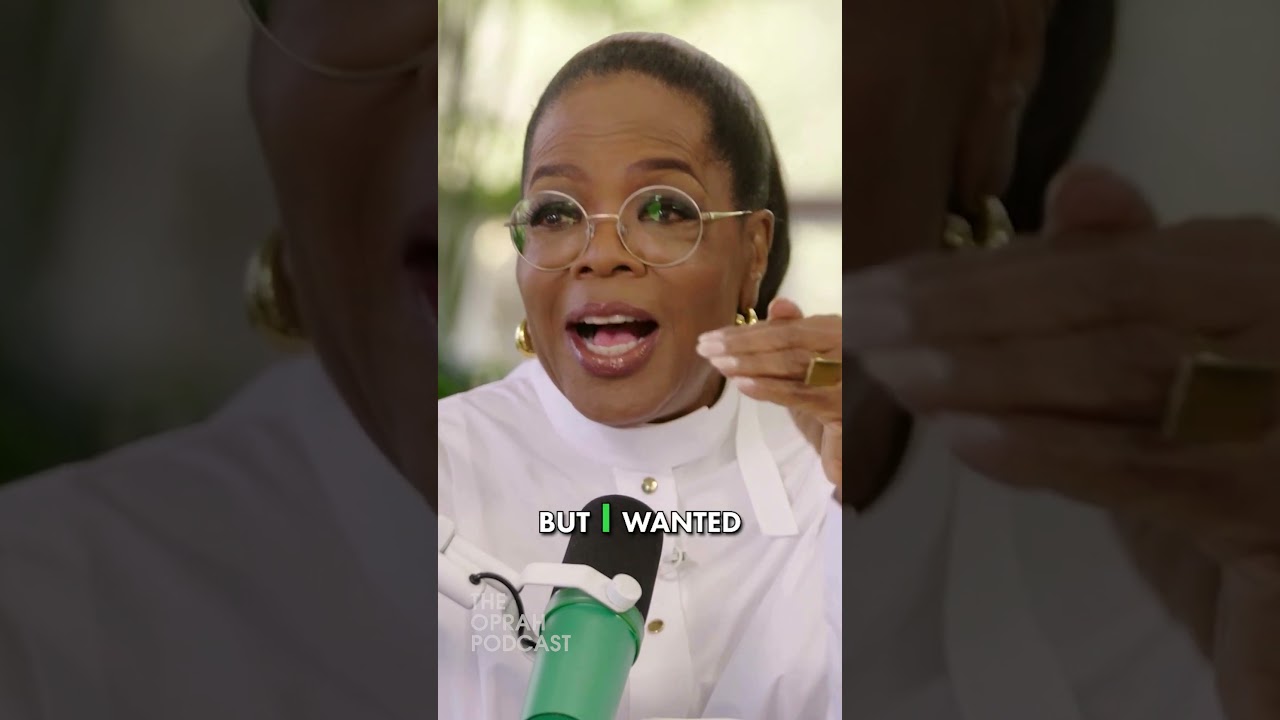
Ruiz moves beyond the universal definition to identify what he calls "archangels"—messengers of extraordinary reach and amplification. He places Oprah Winfrey in this category, not as a supernatural being, but as someone whose platform and influence magnify the expression of love and gratitude across millions of people (56-77 seconds). An archangel, in Ruiz's framework, is a human who brings many other angels—other messengers—into visibility, allowing them to express themselves and carry love to the world.
This is a functional rather than hierarchical distinction. Archangels are those whose work creates a "big shift" in human consciousness precisely because they are "changing everything." Ruiz acknowledges the scope of Oprah's influence across decades of broadcasting, yet frames her impact not as personal fame but as service to humanity's collective awakening. The role of an archangel, then, is multiplicative: they do not merely transmit love themselves but create the conditions for countless others to do so.
How Do Small Acts of Kindness Reflect Larger Spiritual Laws?
Ruiz grounds his philosophy with a deeply personal story: during a family crisis when his grandmother was praying and his family faced hardship, flowers arrived at their home sent by Oprah (109-143 seconds). His grandmother, who spoke only Spanish and had no exposure to English-language television, did not know who Oprah was. Yet the flowers moved her profoundly—she washed them, closed her eyes, nodded in acknowledgment, and a tear came to her face.
This moment illustrates what Ruiz means by the ripple effect of gratitude and generosity. The flowers were not a personal gift from one individual to another; they were an expression of the principle that when one person reaches understanding and acts from love, that love propagates outward without the recipient needing to know its source. The grandmother's response—gratitude without context, appreciation without knowledge of the sender's fame—reveals that genuine spiritual transmission bypasses celebrity and language barriers.
Ruiz's story demonstrates that the "archangel" effect is not dependent on recognition or visibility in the conventional sense. His mother, at approximately 90 years old, received an act of generosity and responded with the full depth of human recognition: she felt cared for, and that feeling was real regardless of who sent it. This is how an archangel multiplies the work: by sending love into the world without demanding recognition as a prerequisite for its reception.
What Is the Equilibrium Ruiz Calls the Foundation of Love?
Toward the end of his talk, Ruiz articulates a core principle: "love is just an equilibrium between love, gratitude, and generosity" (187-190 seconds). This is not poetic language but a precise statement of how consciousness operates. Love is not a unidirectional feeling; it is a dynamic balance between three elements.
- Love is the capacity to connect and care for others.
- Gratitude is the recognition of what has been given, received, or witnessed.
- Generosity is the act of giving without expectation of return.
When all three are present in equilibrium, consciousness shifts. Ruiz is grateful for what Oprah does; in response, his generosity moves him to share wherever he goes. This is not obligation or debt repayment—it is the natural circulation of energy that occurs when someone perceives themselves as having received. Gratitude becomes generosity becomes love becomes gratitude again, in an endless loop that elevates human experience.
This framework explains why Ruiz can celebrate a television appearance as spiritual work: he is using his platform to continue the circulation, to send his own message of love to those who encounter his words, mirroring the same principle that moved Oprah to send flowers to a family she did not know.
How Does This Apply to Creating Conscious Human Connection?
Ruiz's ultimate teaching is that "this is what human is all about—to help one another" (174-180 seconds). When all humans awaken to their role as messengers, and when enough people embody the equilibrium of love, gratitude, and generosity, a tipping point is reached. Consciousness itself shifts at the collective level.
The implication is that spiritual evolution is not mystical or abstract—it is profoundly practical. It happens through acts as simple as sending flowers. It happens through words spoken on a broadcast. It happens through gratitude expressed silently by an elderly woman in a home. Each act is a node in a network of love that gradually rewires how humans relate to one another.
Ruiz's appreciation for his upcoming appearance on Oprah's show is thus more than personal recognition—it is an opportunity to participate in that network, to be one more messenger among millions, to contribute to the shift he perceives as both real and necessary.
Where to go from here
Consider where you are a messenger in your own life. Ruiz's redefinition of angels as humans who transmit love suggests that the people you encounter—family, coworkers, strangers—perceive and receive your presence as either loving or not. This awareness is the foundation of conscious action. Examine your own relationship to the equilibrium of love, gratitude, and generosity: are you receiving and acknowledging what you receive? Are you moved to give in response? Is your capacity to love expanding or contracting? The shift in consciousness Ruiz describes is not something that happens to you—it is something you participate in each time you choose to be a conscious messenger.